The Southern Oasis: Marrakech, the High Atlas and the Sahara in Ten Days
A Private Journey from Marrakech to the Sahara and Back
Trip Overview
Duration: 10 days / 9 nights
Group size: Private — your party only
Start / Finish: Marrakech (RAK)
Guiding: Amine Nasraoui, certified historian guide, or a licensed guide, hand-selected by Amine Nasraoui
Investment
Every journey is designed individually, around your dates, your interests and your pace. The price reflects that design: the properties selected for your journey, your private guide and chauffeur, and the touring described on this page. Journeys of this caliber begin from $11,900 per person, based on double occupancy — reserved entirely for you and your travel companions.
Route at a glance
Marrakech · Telouet · Aït Ben Haddou · Ouarzazate · Dades Valley · Todgha Gorges · Erfoud · Erg Chebbi · Draa Valley · Agdz · Ouarzazate · Marrakech — 10 days, 9 nights. Private to your party only. Amine Nasraoui, certified historian guide, guides personally whenever he can; otherwise a licensed guide, hand-selected by Amine Nasraoui, travels with you. Your private chauffeur stays with the journey throughout.
Curated Highlights
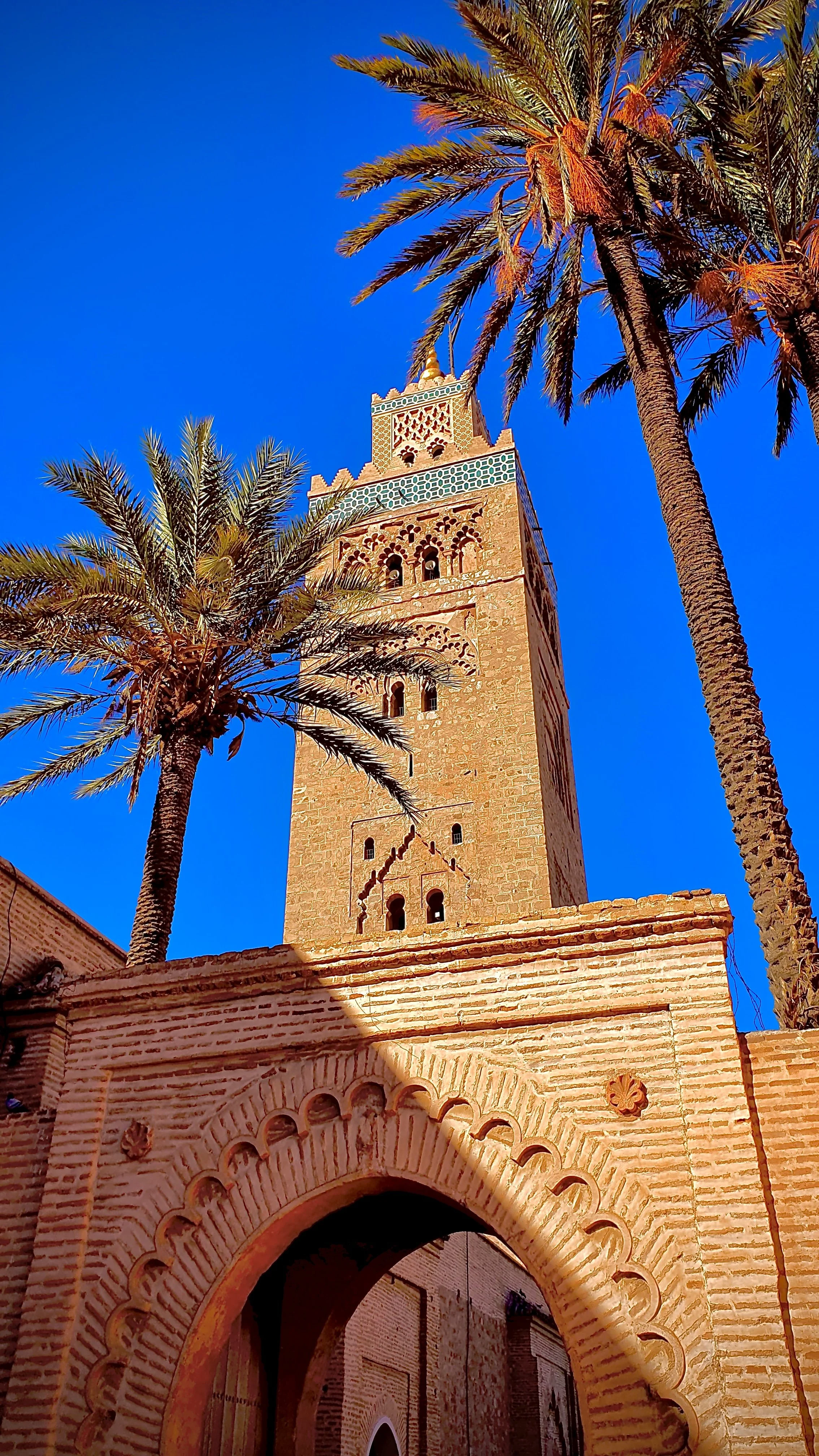
Marrakech with your guide: the Koutoubia minaret, the Saadian Tombs and the Bahia Palace
An evening carriage ride along Marrakech's ramparts, first raised by the Almoravids around 1126
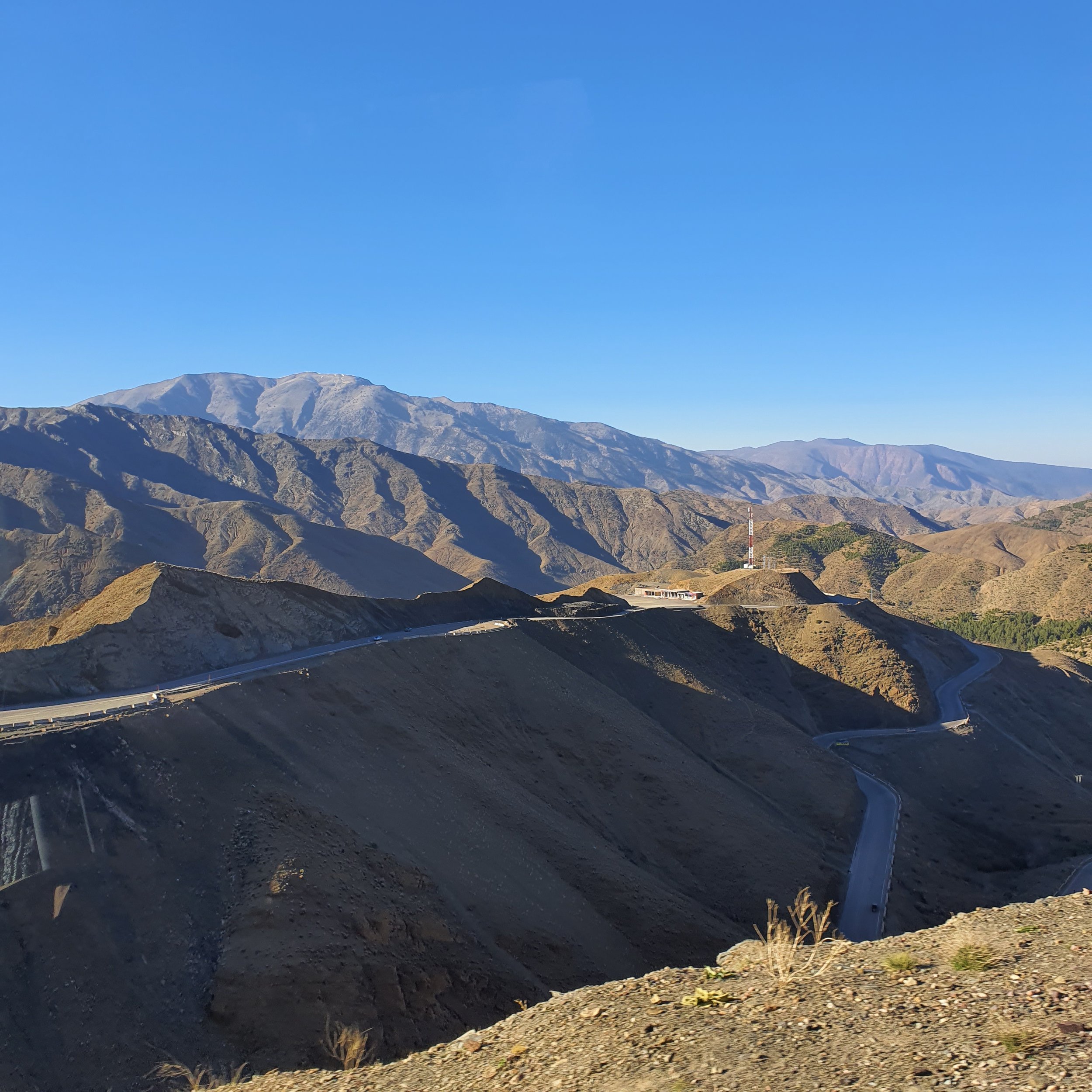
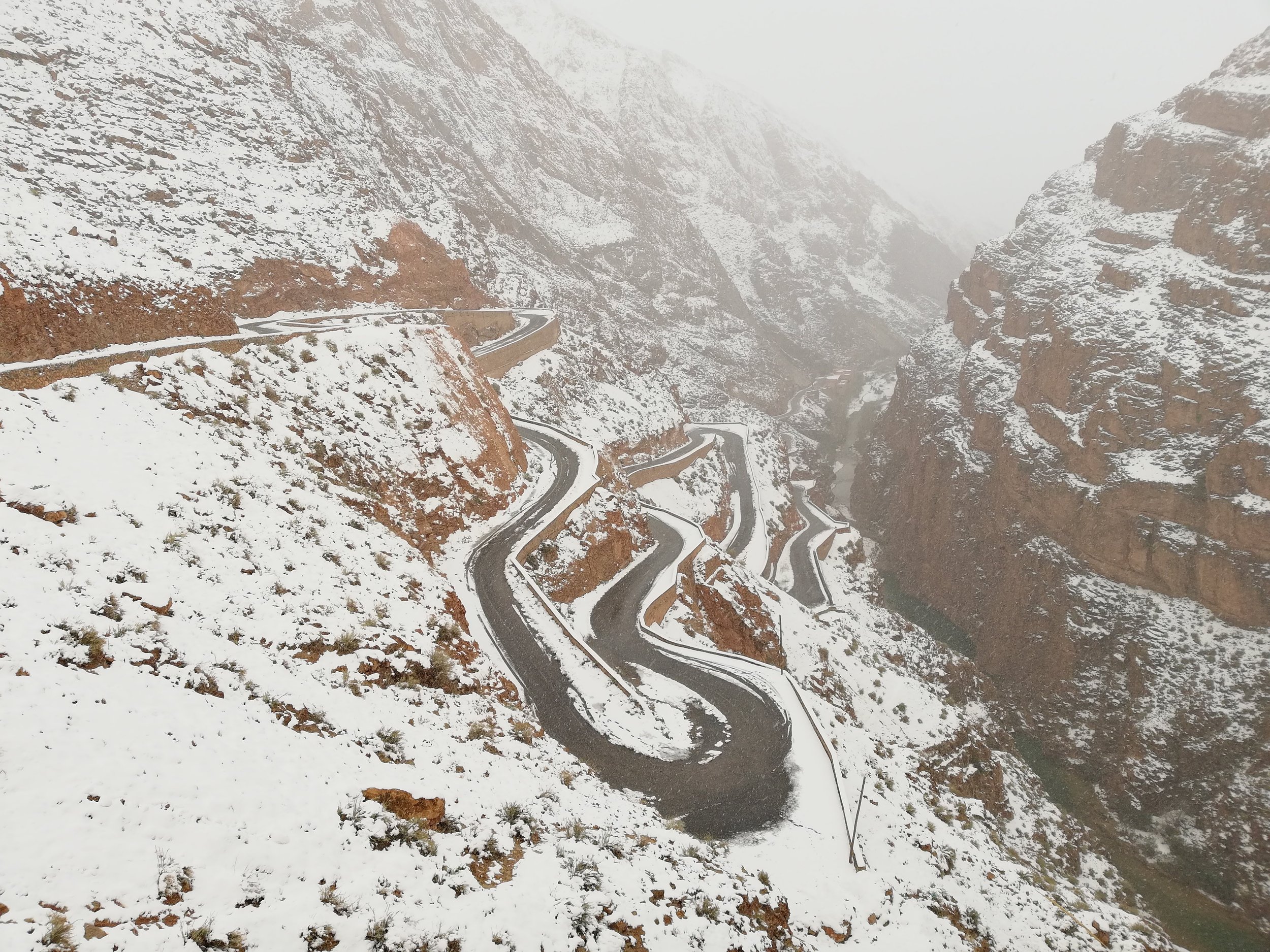
Telouet, the Glaoui kasbah in the High Atlas, and the Tizi n'Tichka pass at 2,260 metres
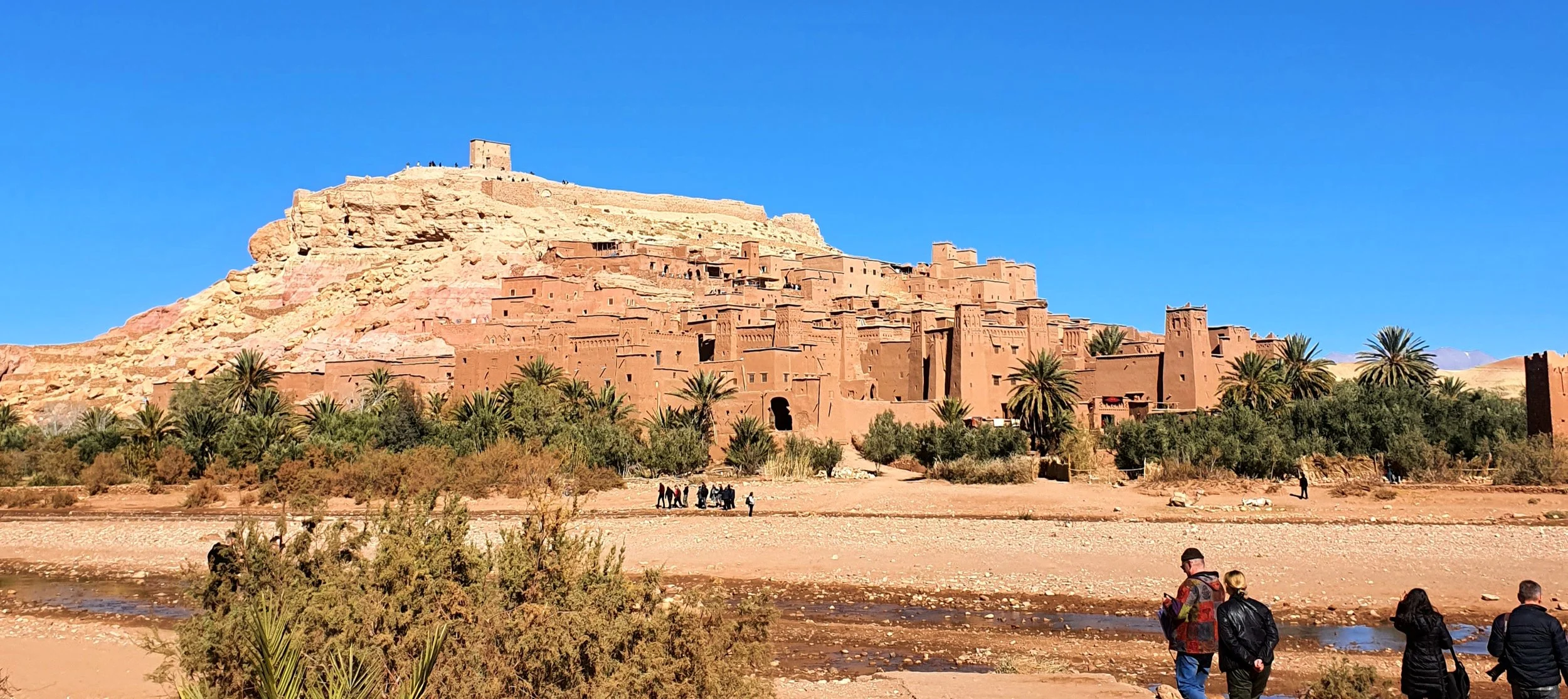
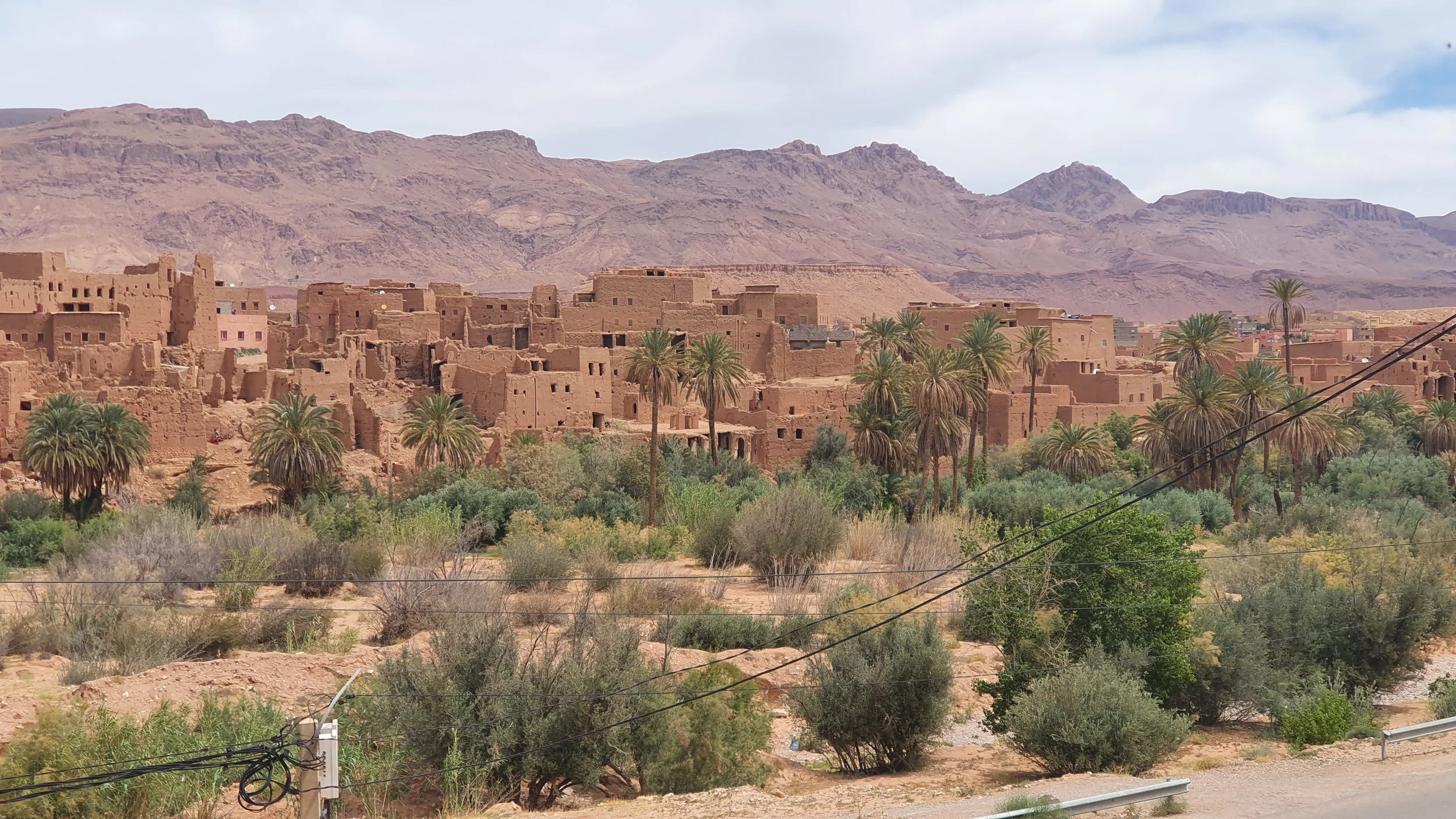
Aït Ben Haddou, the fortified ksar — a UNESCO World Heritage site
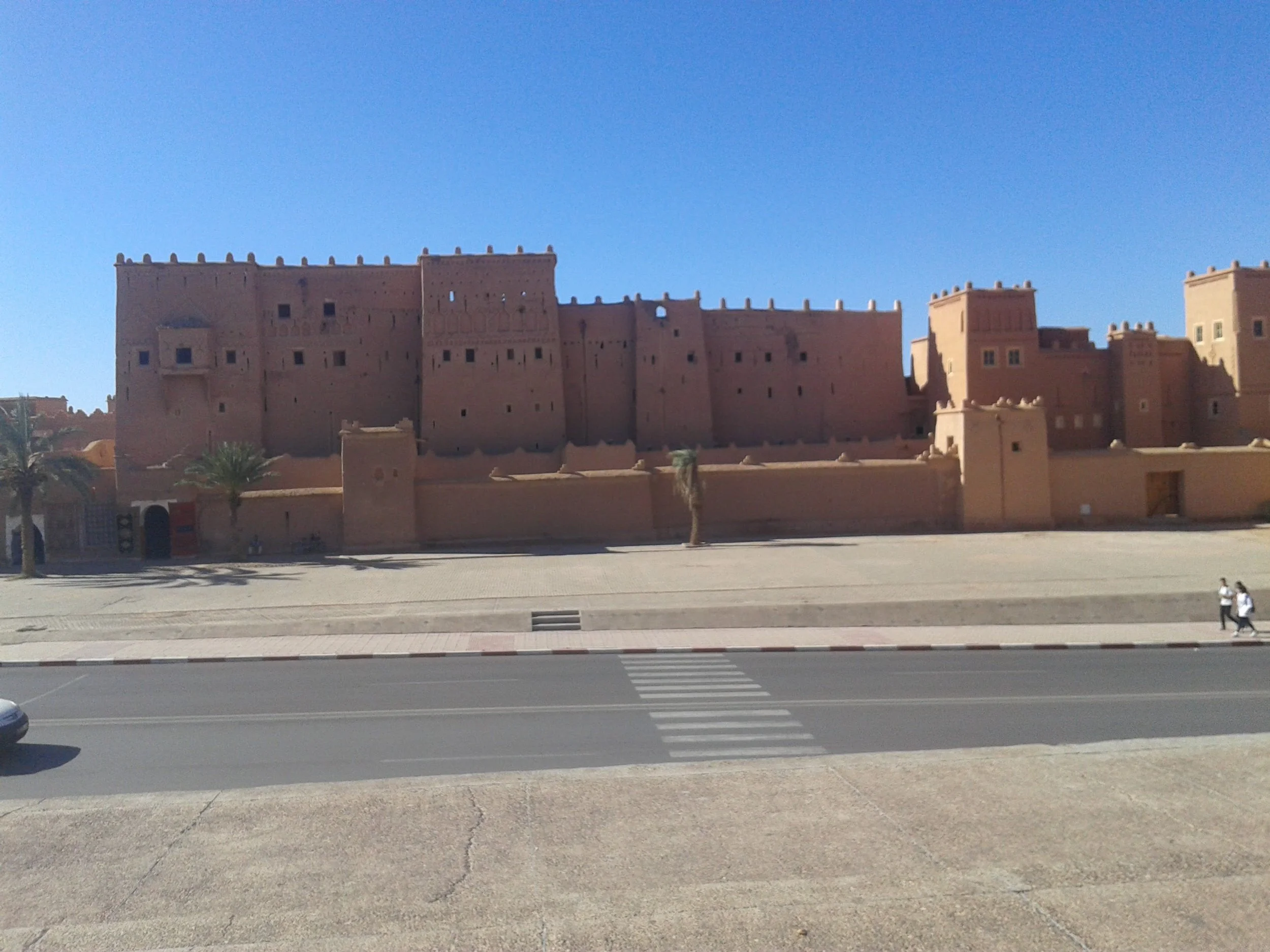
Ouarzazate: the Atlas Film Studios and the Taourirt Kasbah
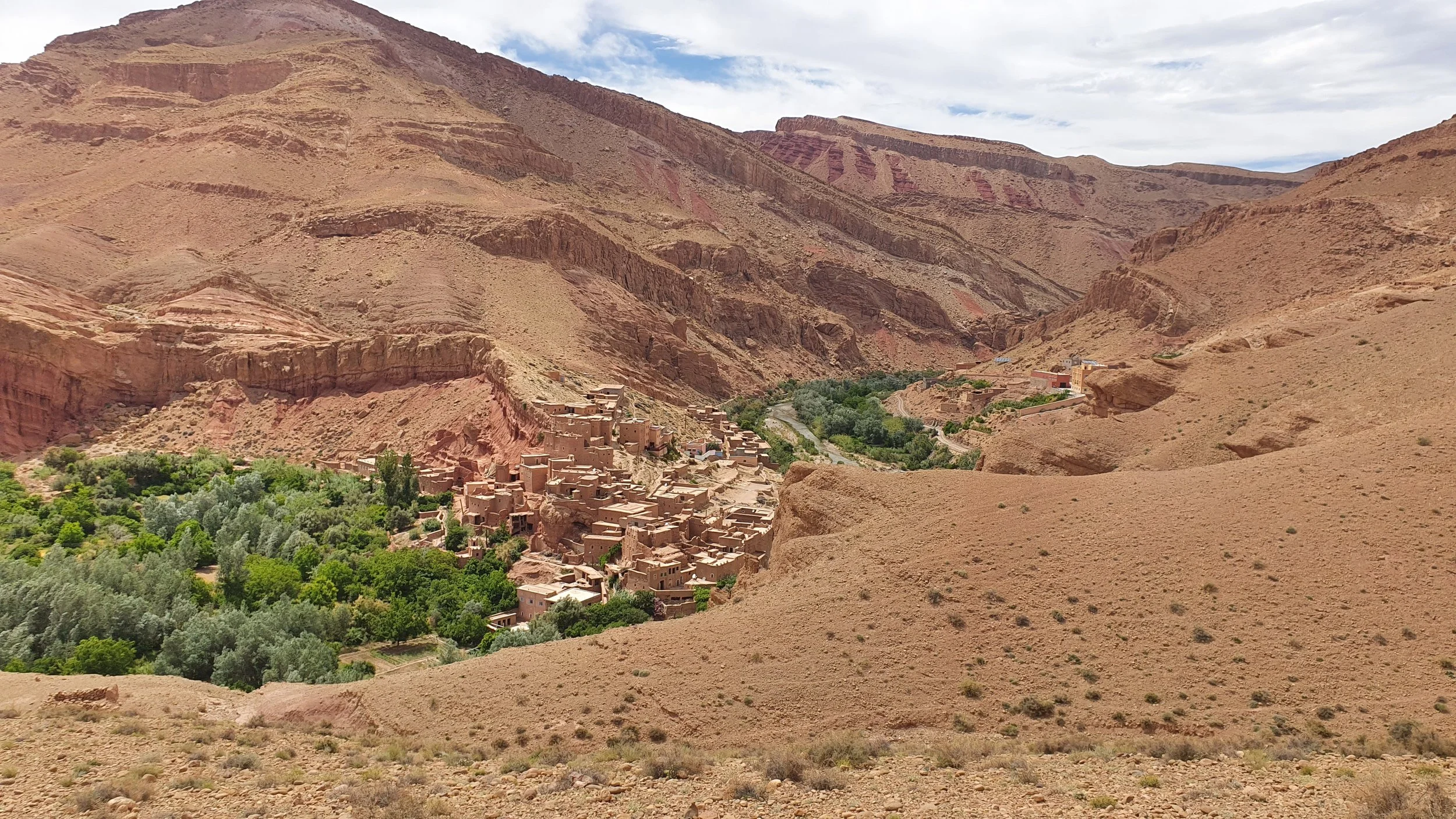
The Valley of Roses at Kelaât M'Gouna and the Dades Valley
The Todgha Gorges, limestone walls rising some 300 metres
Erfoud's fossil workshops and Rissani, market town of the Tafilalt — the Alaouite homeland
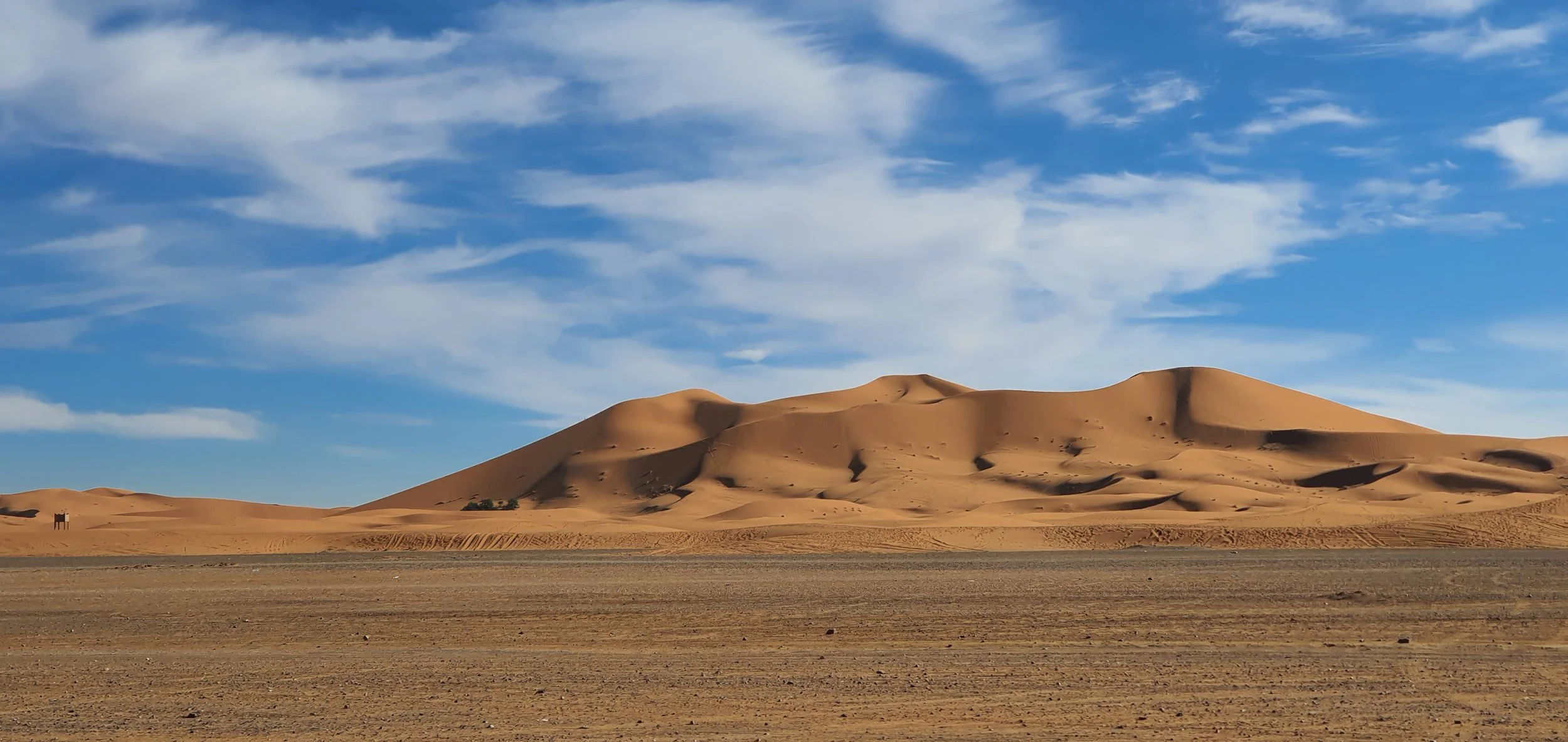
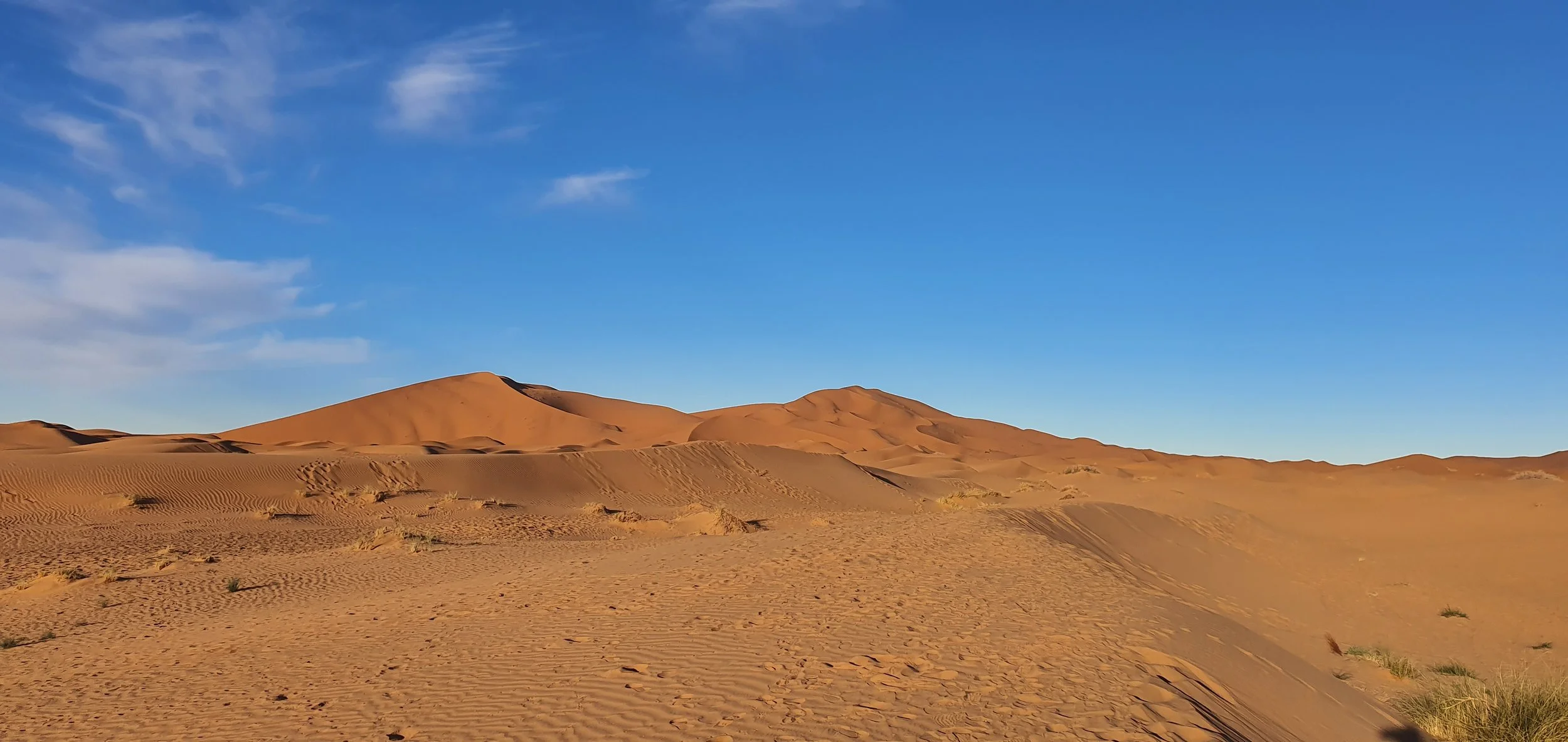
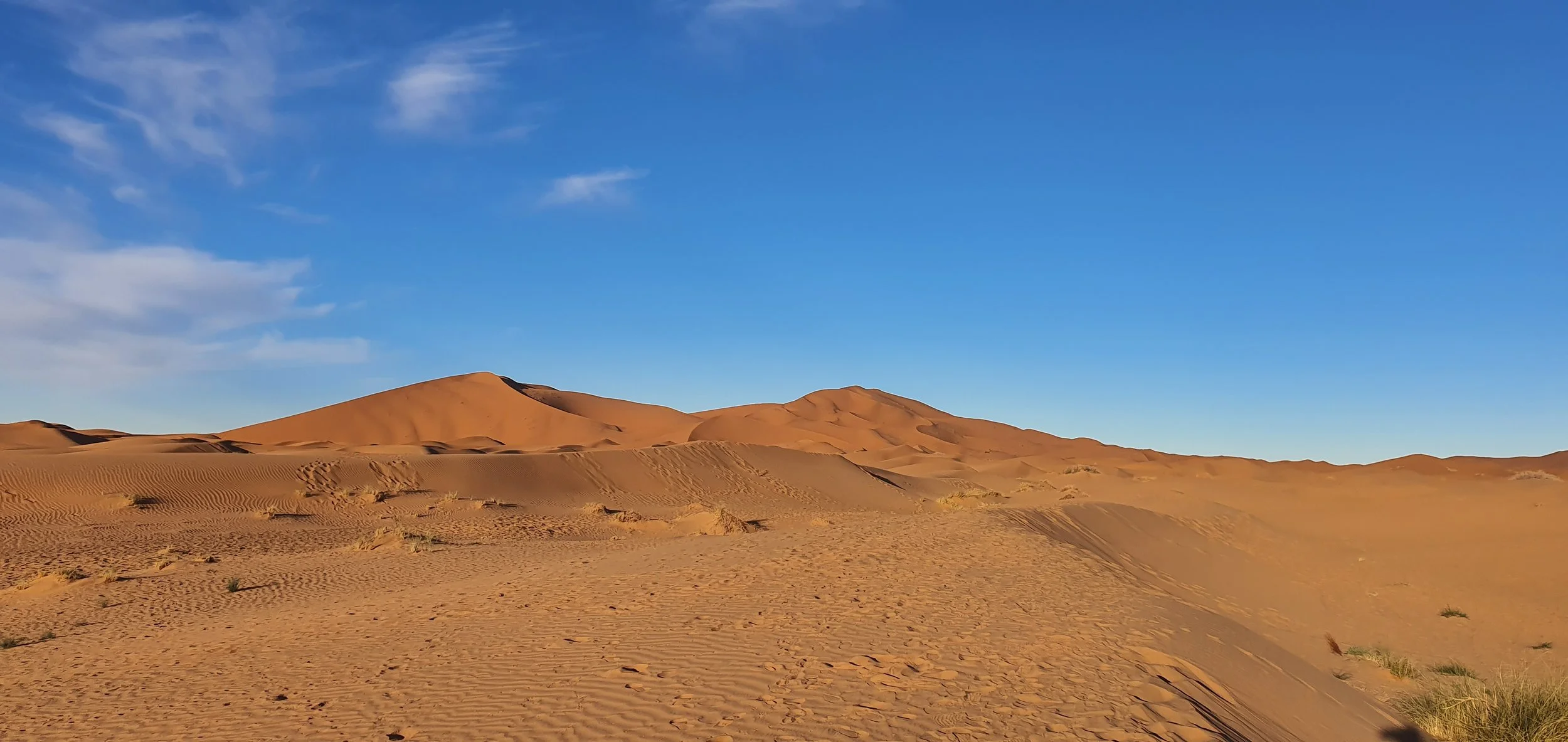
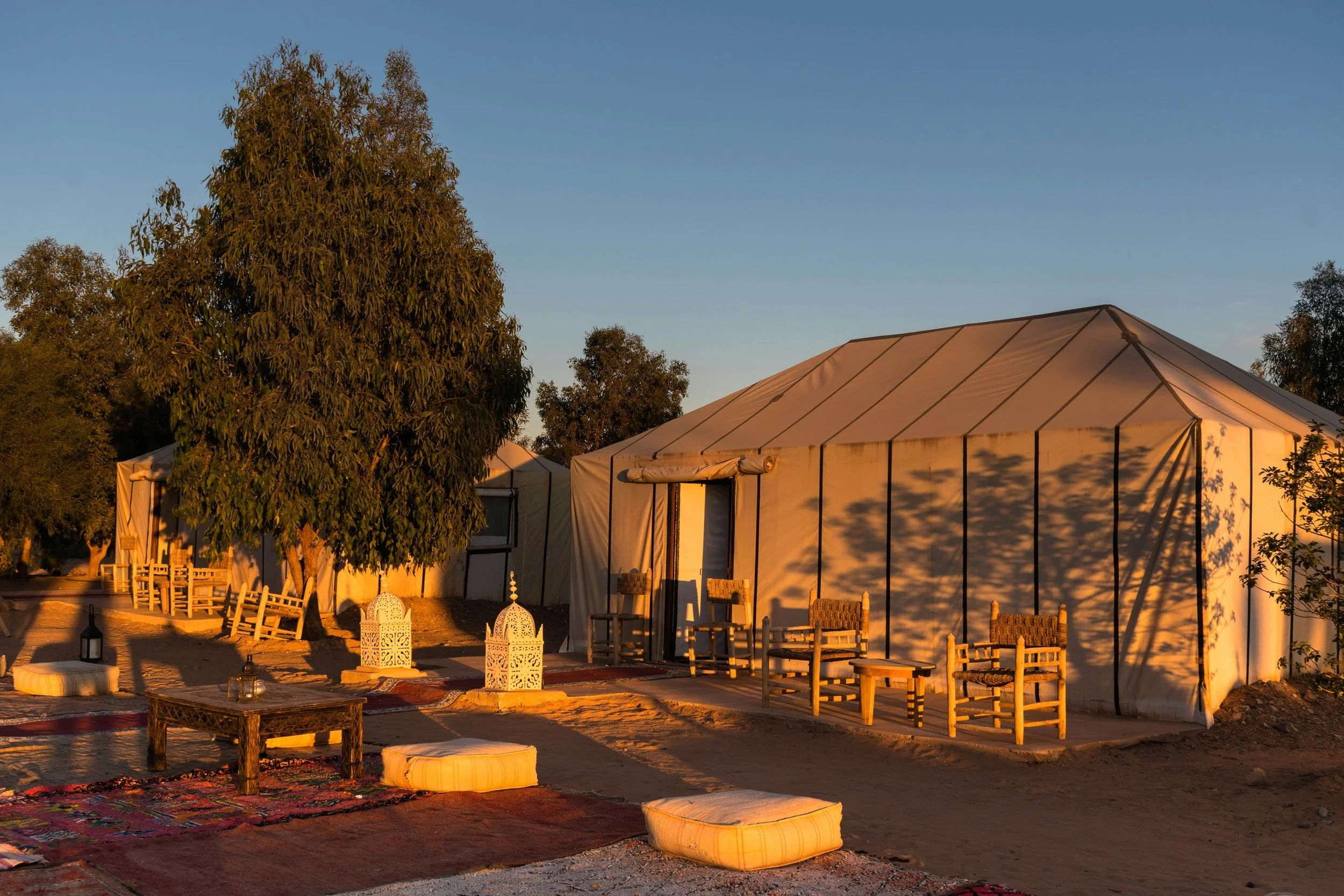
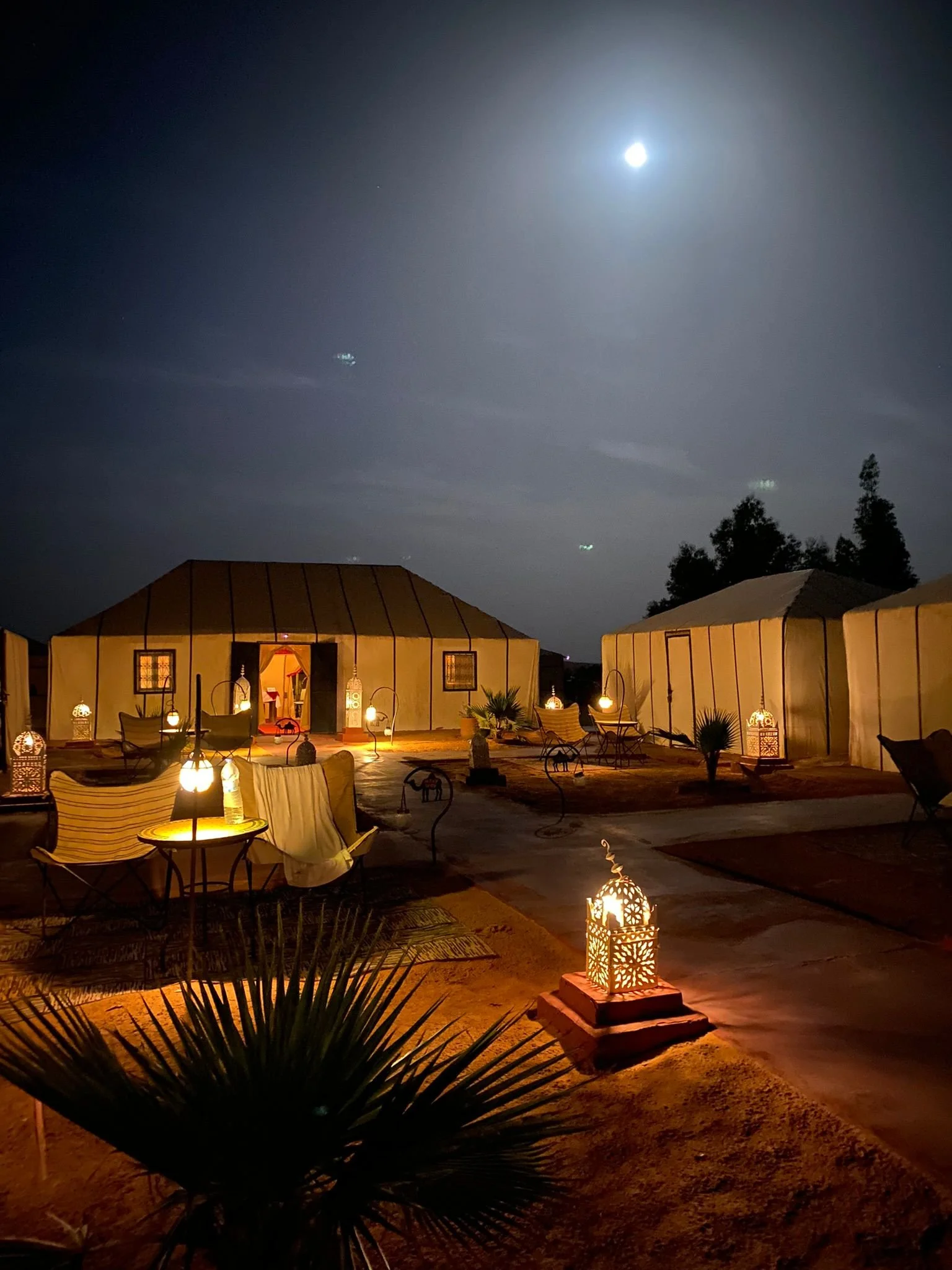
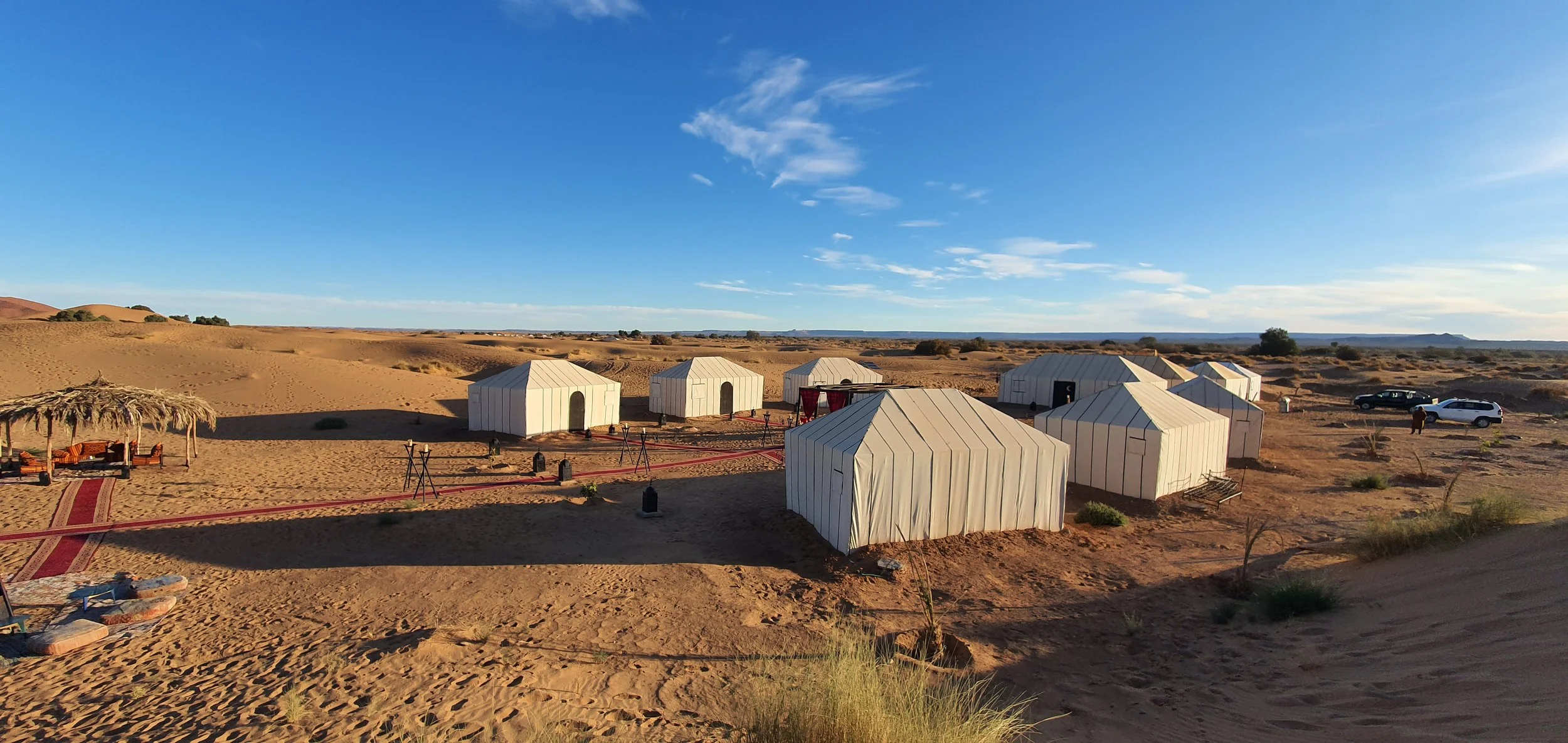
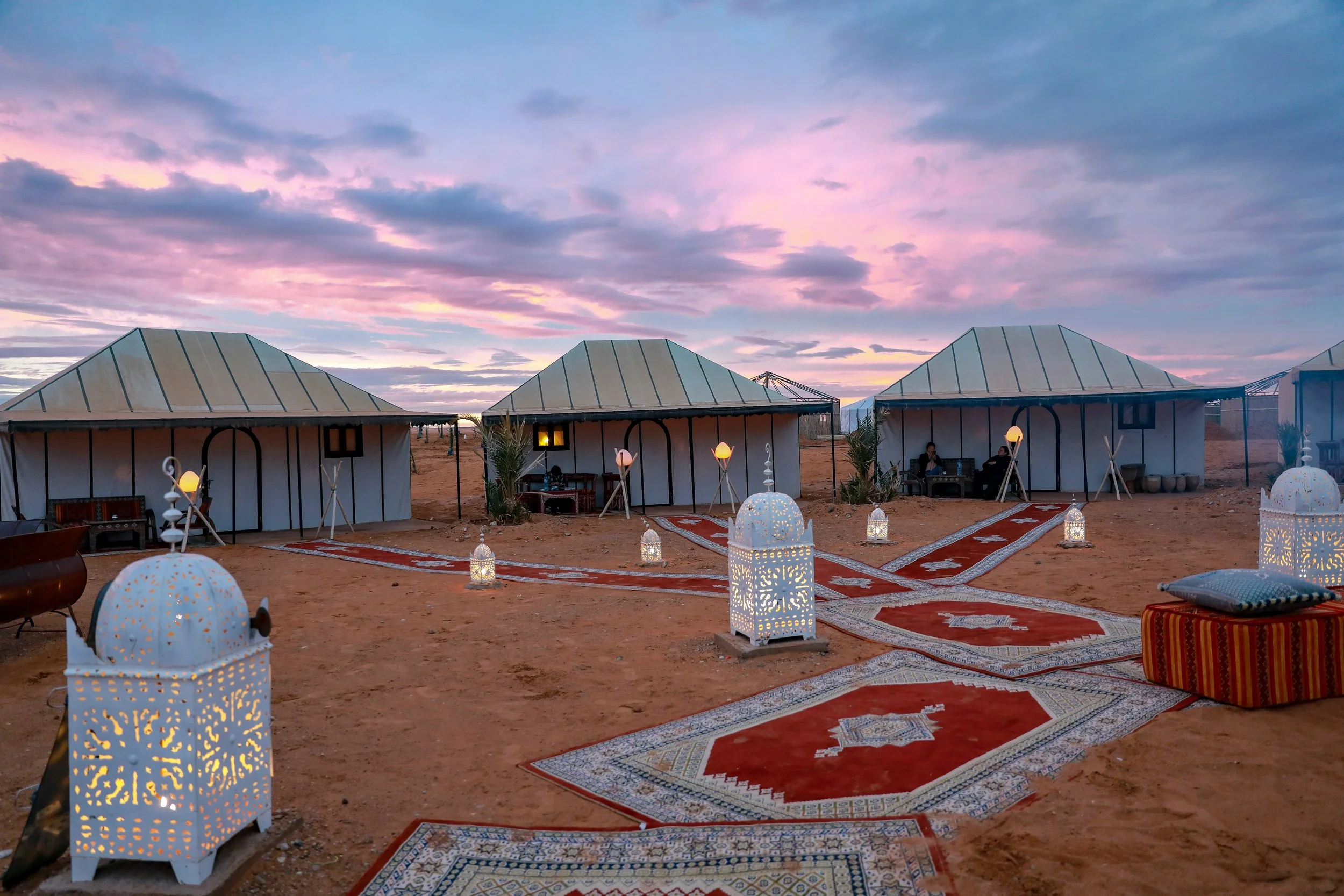
Sunset by camel into Erg Chebbi, two nights in a private tent at a luxury camp, and Gnawa music at Khamlia
The Draa Valley palm groves and the caravan town of Agdz
The journey, day by day
Day 1 — Arrive in Marrakech
A private airport welcome at Marrakech Menara Airport (RAK), then your private chauffeur takes you to your hotel. In the evening, a horse-drawn carriage ride along the city ramparts — first raised by the Almoravids under Ali ibn Yusuf around 1126 and later extended under the Almohads.
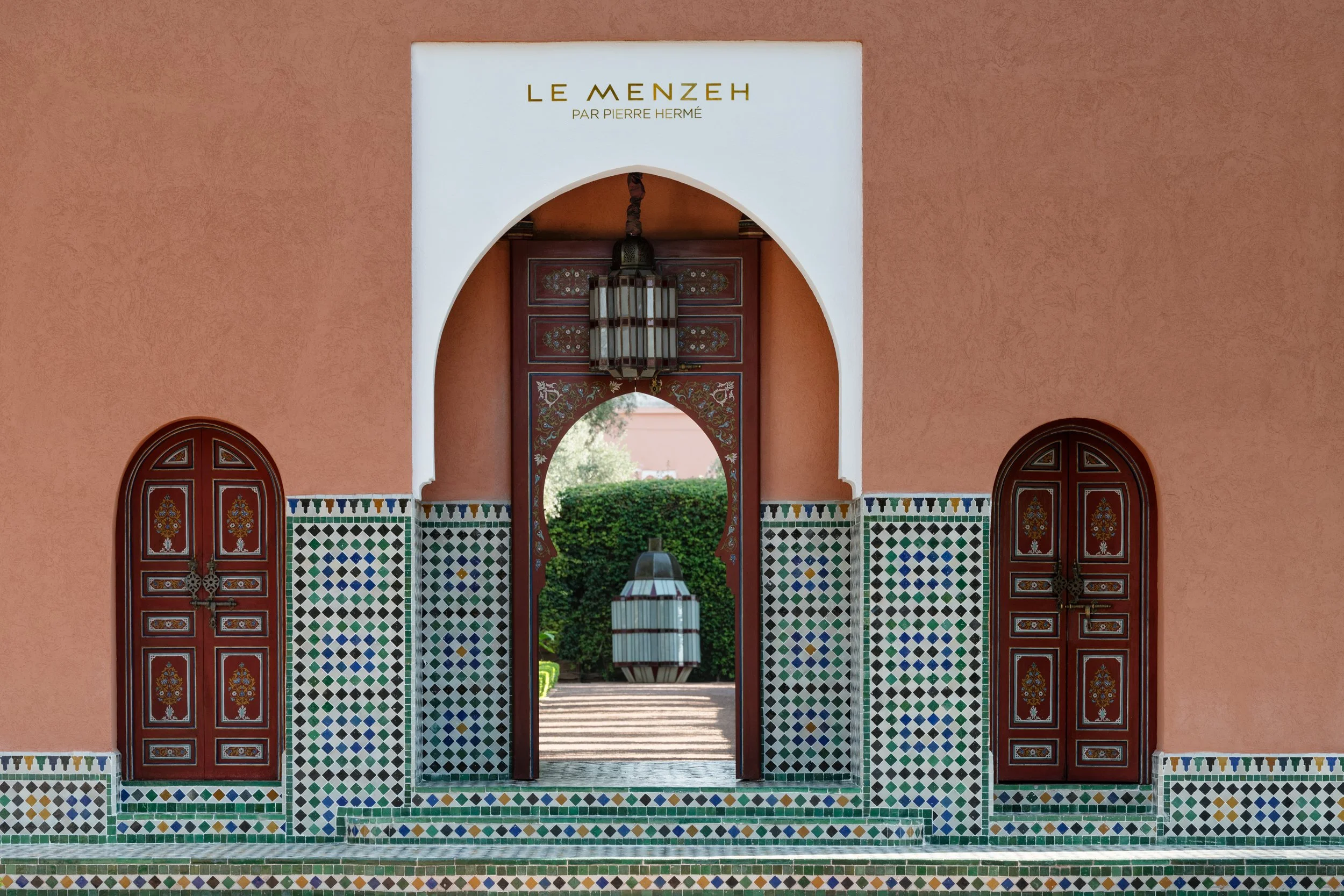
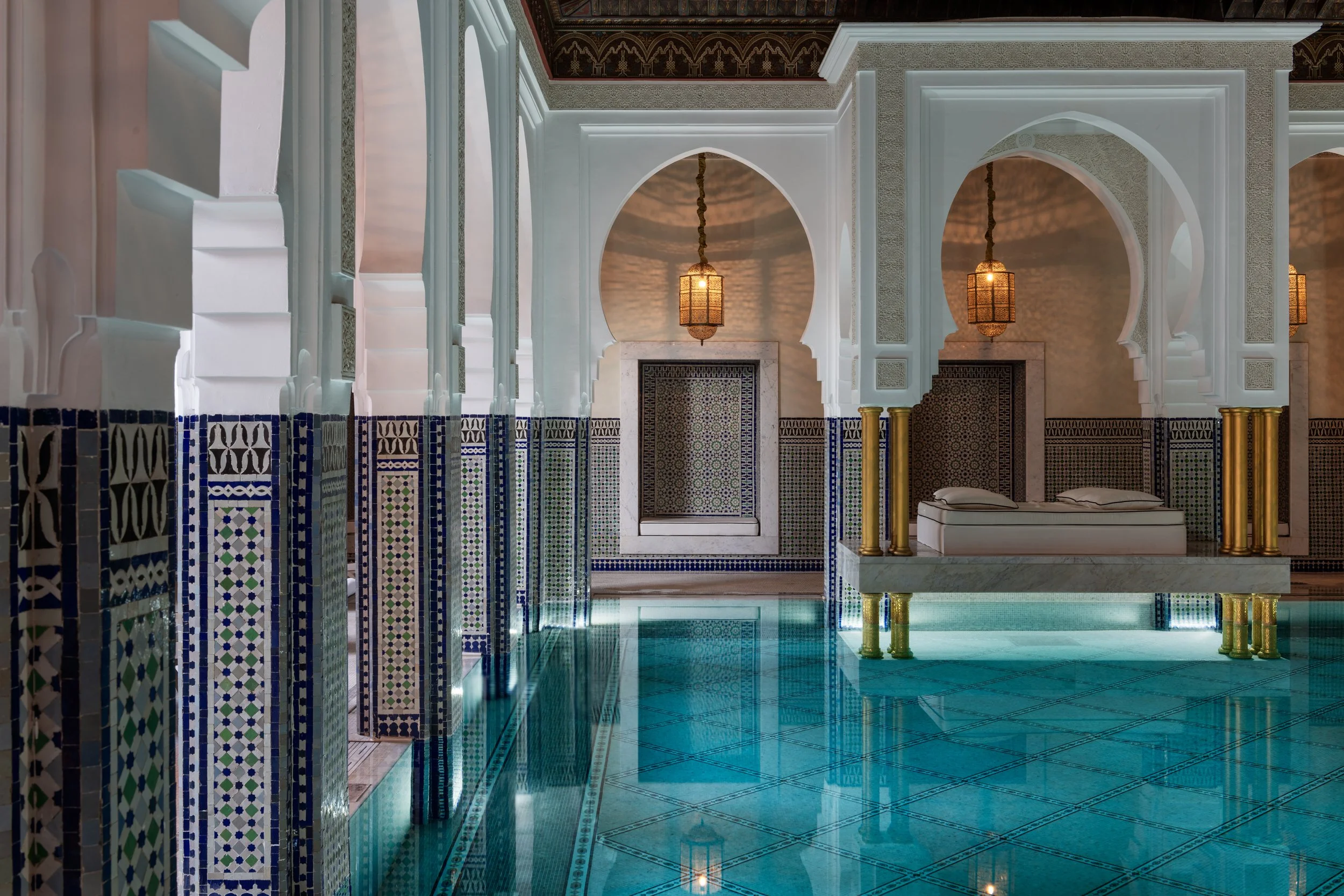
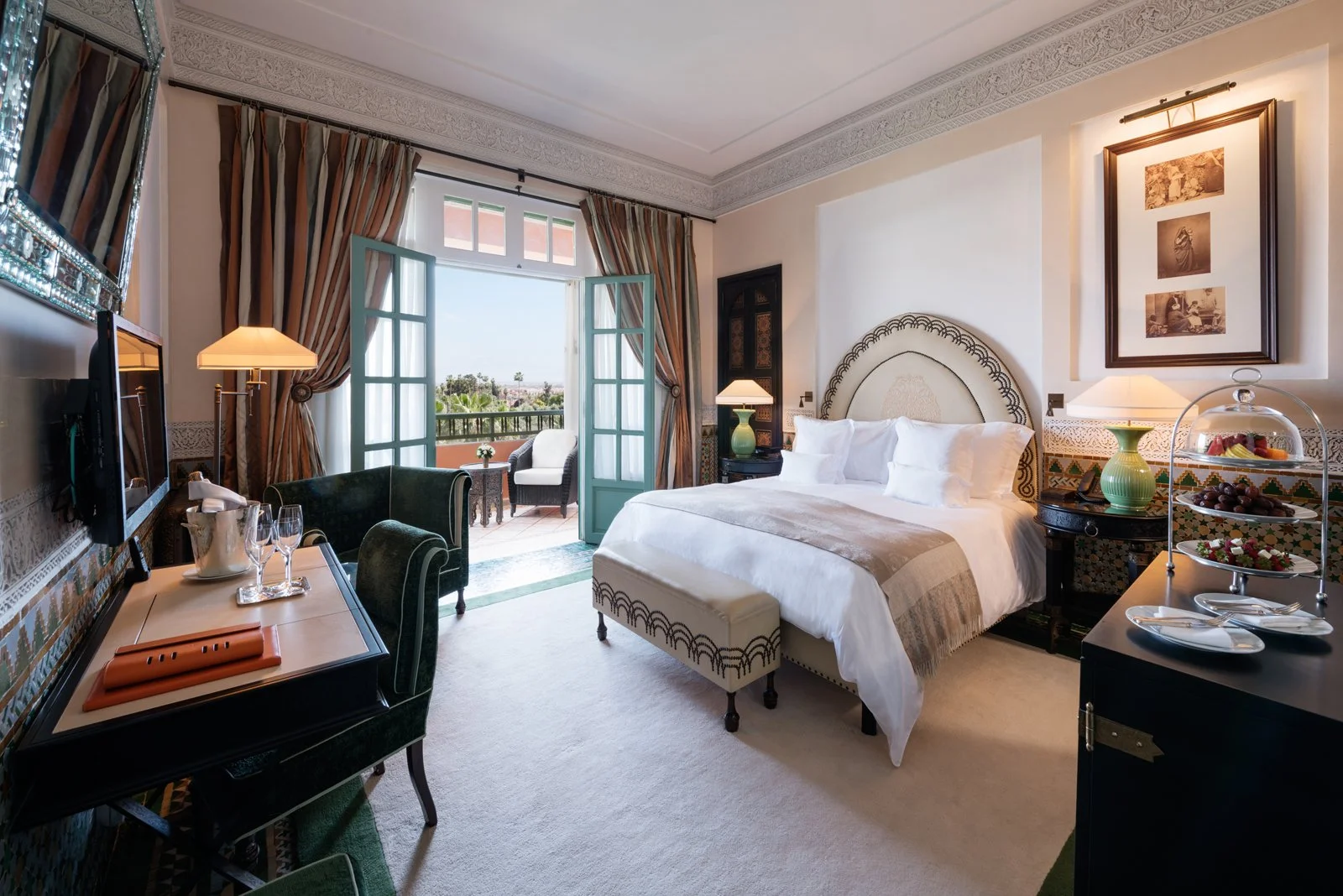
Overnight: Marrakech — a selected five-star hotel, riad or kasbah from our partner properties, chosen to your request (subject to availability)
Day 2 — Marrakech, the southern capital
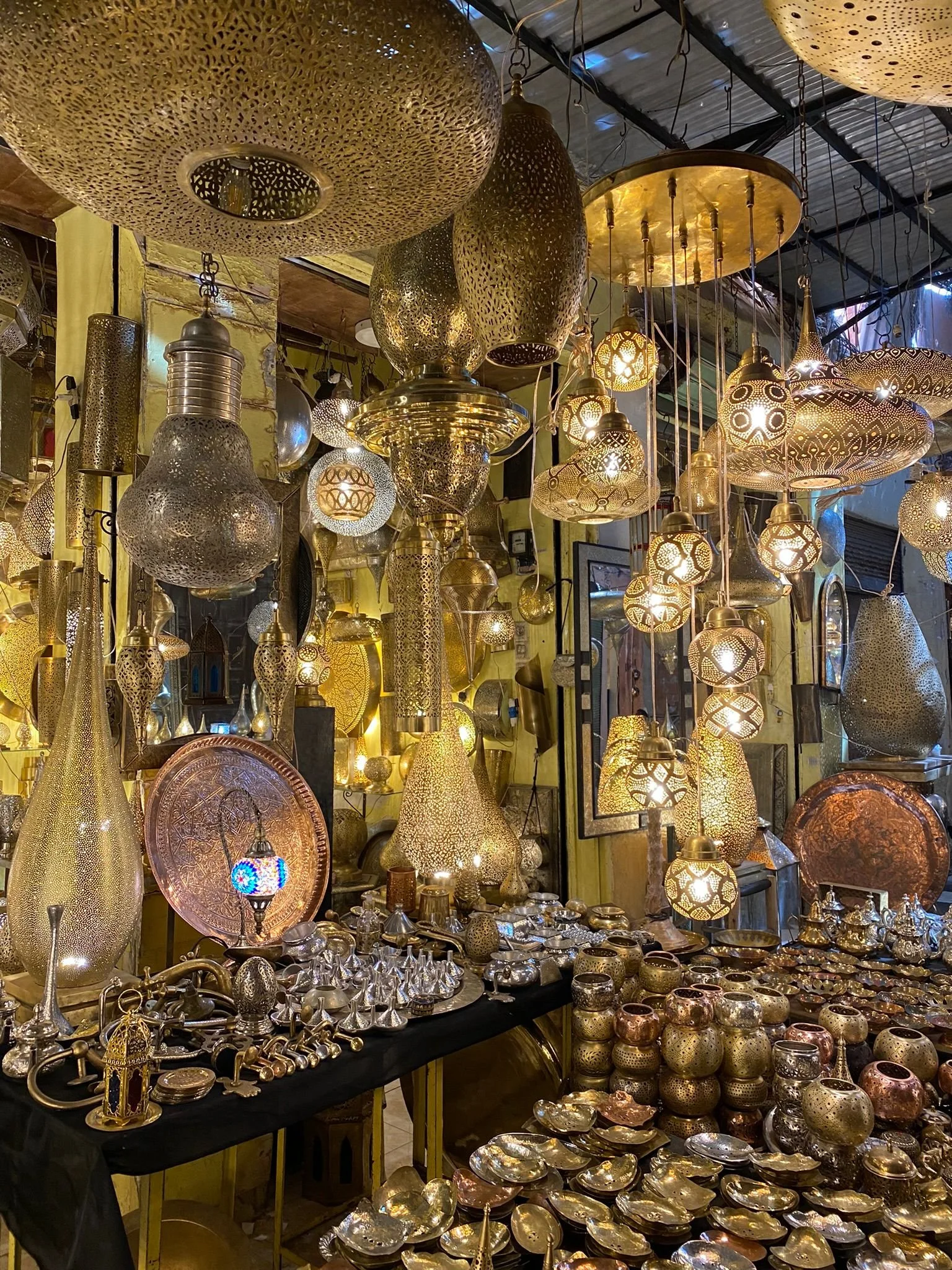
A full day in the city with your guide: the Koutoubia minaret, the Almohad tower of the 12th century; the Kasbah district and the Saadian Tombs, the necropolis of the Saadian sultans of the 16th century; the Mellah, the Jewish quarter established in 1558; and the Bahia Palace, begun by the vizier Si Moussa in the 1860s and expanded by his son Ba Ahmed in the 1890s. The afternoon is given to the souks, trade by trade, with your guide beside you. Evening at the hotel.
Overnight: Marrakech — a selected five-star hotel, riad or kasbah from our partner properties, chosen to your request (subject to availability)
Day 3 — Marrakech to Aït Ben Haddou, over the High Atlas
The road climbs the High Atlas to the Tizi n'Tichka pass (2,260 m). Beyond the pass, a short stop at Telouet, the Glaoui family's mountain kasbah, where painted cedar ceilings and zellij reception rooms remain from its years as a seat of power in the Atlas. The road then follows the Asif Ounila valley — the old caravan road between the Sahara and Marrakech. At its heart stands Aït Ben Haddou, the fortified ksar, a UNESCO World Heritage site built up over centuries in earth and straw; its lanes and granaries have stood in for half the ancient world on film, from Lawrence of Arabia to Gladiator.
Overnight: Aït Ben Haddou — the finest hotel, riad or kasbah available locally, selected from our partner properties (subject to availability)
Day 4 — Ouarzazate and the Valley of Roses, to the Dades
Morning in Ouarzazate: the Atlas Film Studios, where the desert epics were shot, and the Taourirt Kasbah, the Glaoui stronghold that guarded the caravan routes south toward Timbuktu. East from there, the road enters the Valley of Roses at Kelaât M'Gouna, where Damask roses are cultivated in hedgerows along the river — the harvest fills the valley in spring. The day ends in the Dades Valley, below the rock formations known as the Monkey Fingers.
Overnight: Dades Valley — the finest hotel, riad or kasbah available locally, selected from our partner properties (subject to availability)
Day 5 — Tinghir and the Todgha Gorges, to Erfoud
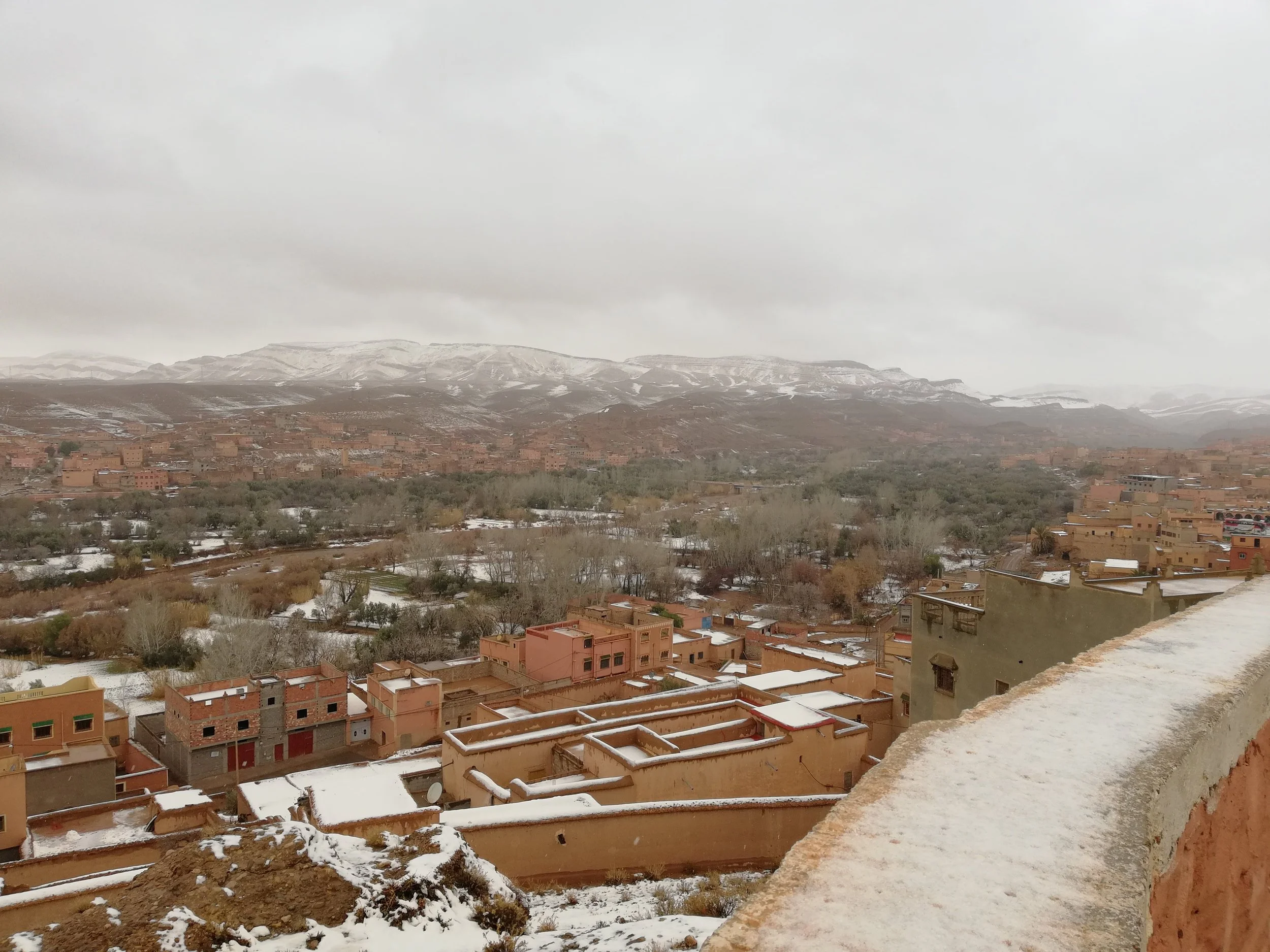
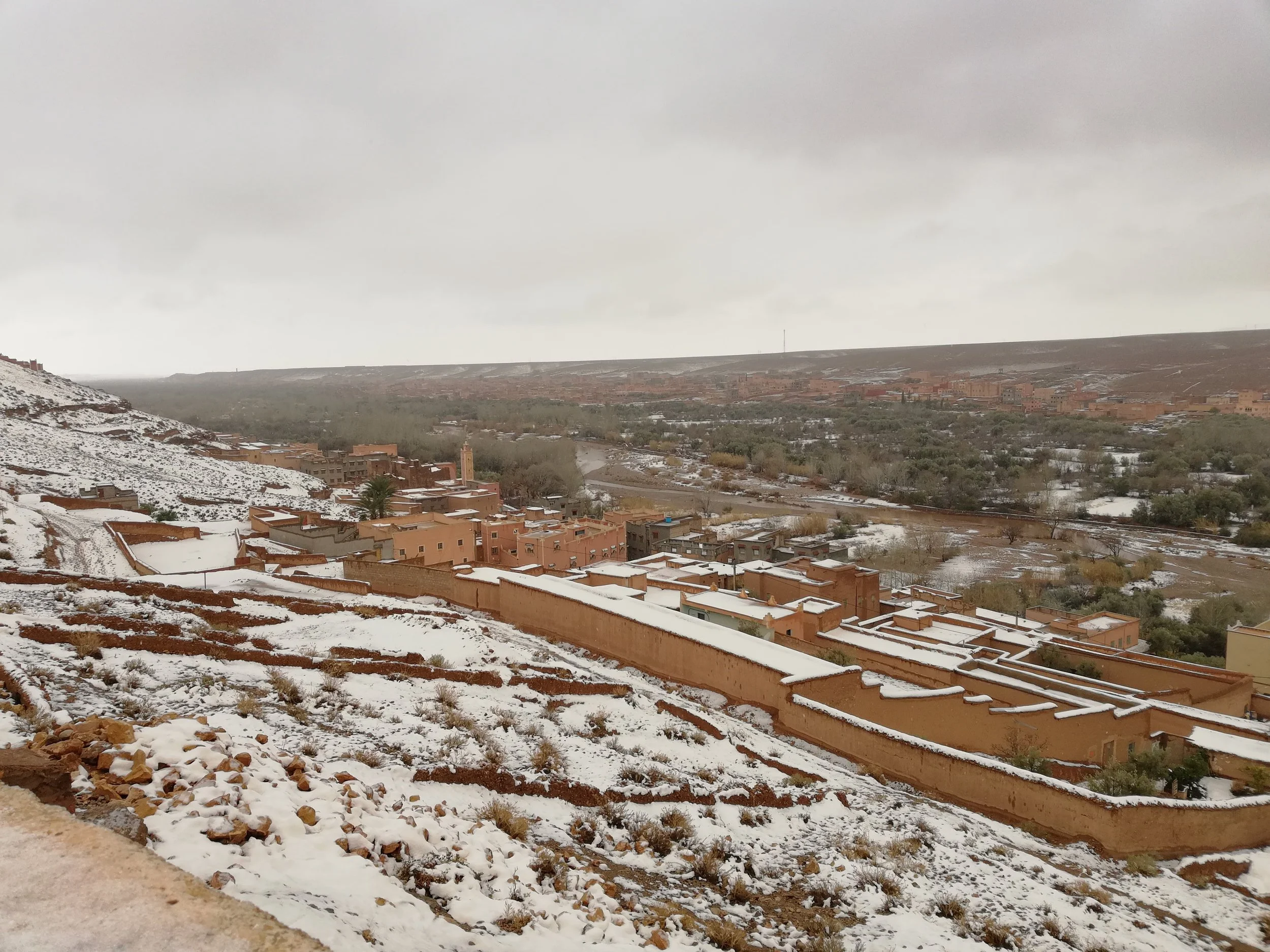
Tinghir, an Amazigh oasis town whose merchants once traded across the Sahara — its old Jewish quarter is a reminder of how mixed these caravan towns were. Above the town, the Todgha Gorges cut through the limestone of the High Atlas foothills, walls rising some 300 metres on either side of the riverbed. From Tinghir the road runs east across open pre-Saharan plains to Erfoud, a town built on two harvests: dates, and the Devonian fossils cut and polished in its workshops.
Overnight: Erfoud — the finest hotel, riad or kasbah available locally, selected from our partner properties (subject to availability)
Day 6 — Rissani and the Tafilalt, into Erg Chebbi
The morning begins in Erfoud's fossil workshops, where goniatites and orthoceras some 380 million years old are prepared by hand. Then Rissani, market town of the Tafilalt: here stands the mausoleum of Moulay Ali Cherif, the revered ancestor of the Alaouite sultans, seen from outside — its interior is reserved for worshippers. This oasis region is the dynasty's homeland, and its sharifs rose from here in the 17th century. Lunch is Madfouna, the stuffed flatbread of the Tafilalt, and there is time in Rissani's market, stacked with dates and spices. Late in the afternoon you ride by camel at sunset into the dunes of Erg Chebbi — a 4x4 is always offered instead, for anyone who prefers it — to a luxury camp, where a private tent is yours for the next two nights. Gnawa musicians play at the camp in the evening.
Overnight: Erg Chebbi — a private tent in a luxury camp at Erg Chebbi
Day 7 — A day in the dunes: nomads and Khamlia
Sunrise over the crests, then a private 4x4 day in the desert around Erg Chebbi. You visit a nomad family in their hand-woven tent and take mint tea with them — a plain account, from the people who live it, of how life is organised where water decides everything. The road continues to Khamlia, the village founded by Gnawa families whose music travelled north on the old sub-Saharan caravan routes; the village musicians play for you there. The afternoon returns to camp, and the night is for the stars the desert keeps.
Overnight: Erg Chebbi — a private tent in a luxury camp at Erg Chebbi, second night
Day 8 — Merzouga to Agdz, through the Draa Valley
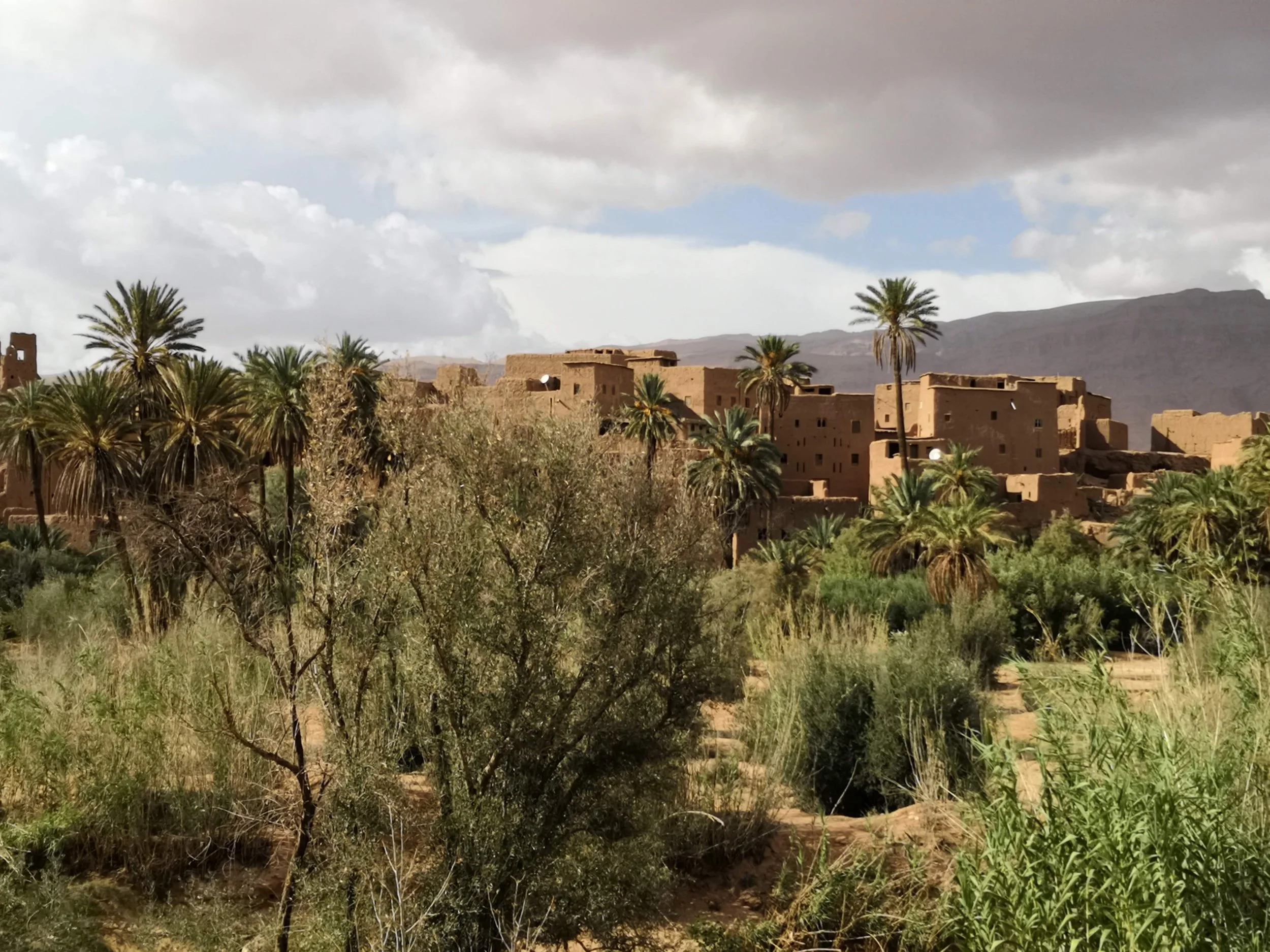
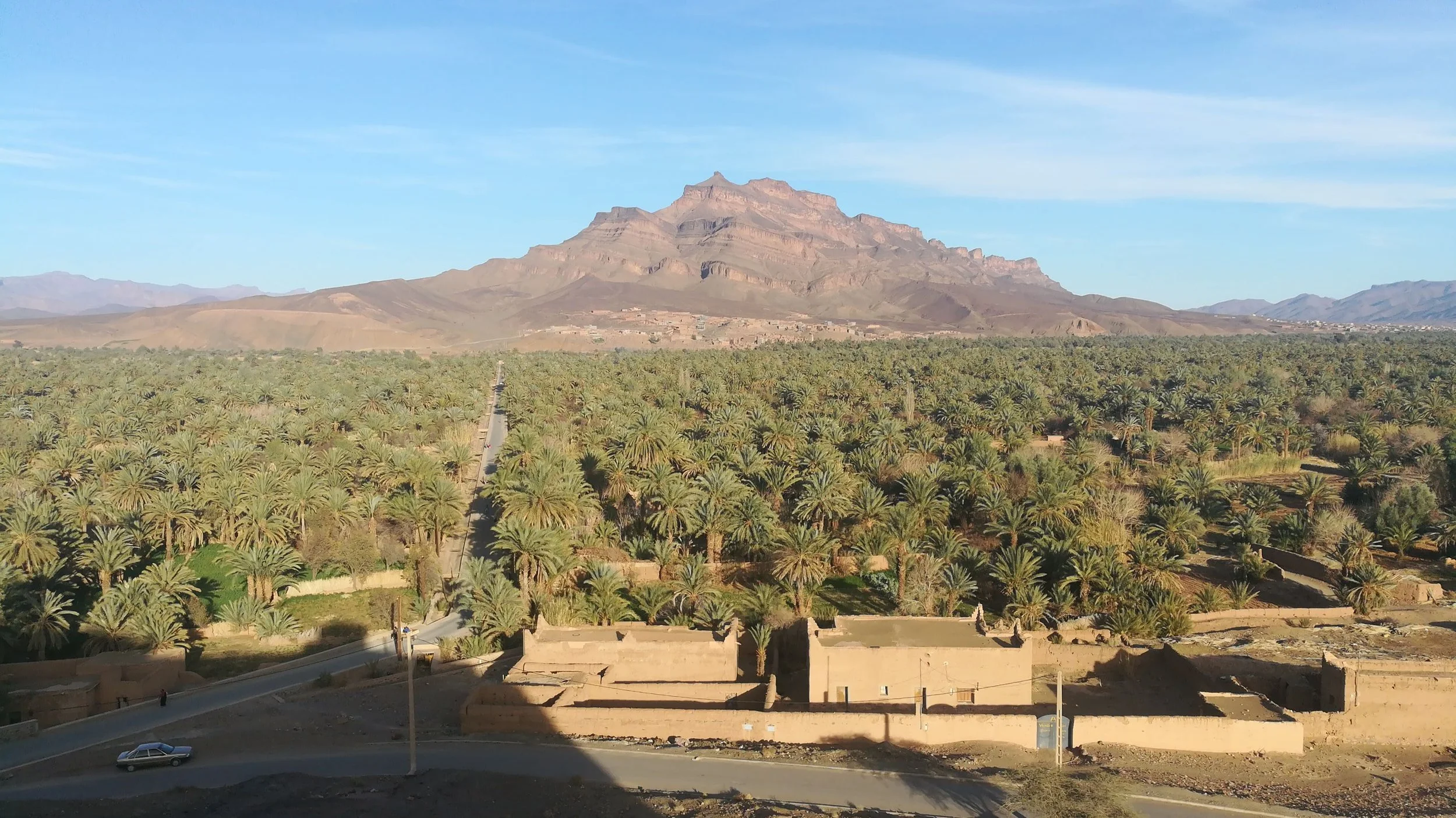
After breakfast at camp, leave the dunes behind and travel west toward Agdz. The road follows the Draa Valley, one of the largest palm groves in North Africa, where date palms and earthen ksour line the river through Zagora and north to Agdz, the valley's old caravan town beneath Jbel Kissane. It is a full day on the road — about six to seven hours with stops — broken by the palm groves and villages of the valley.
Overnight: Agdz — the finest hotel, riad or kasbah available locally, selected from our partner properties (subject to availability)
Day 9 — Agdz to Marrakech, through Ouarzazate and over the Atlas
Leave Agdz after breakfast and travel through Ouarzazate, then over the High Atlas by the Tizi n'Tichka pass — the same pass, seen in the other direction and in different light. The drive takes about six hours with stops. Marrakech by late afternoon; the evening is yours, at your hotel or in the city.
Overnight: Marrakech — a selected five-star hotel, riad or kasbah from our partner properties, chosen to your request (subject to availability)
Day 10 — The Majorelle Garden, and departure
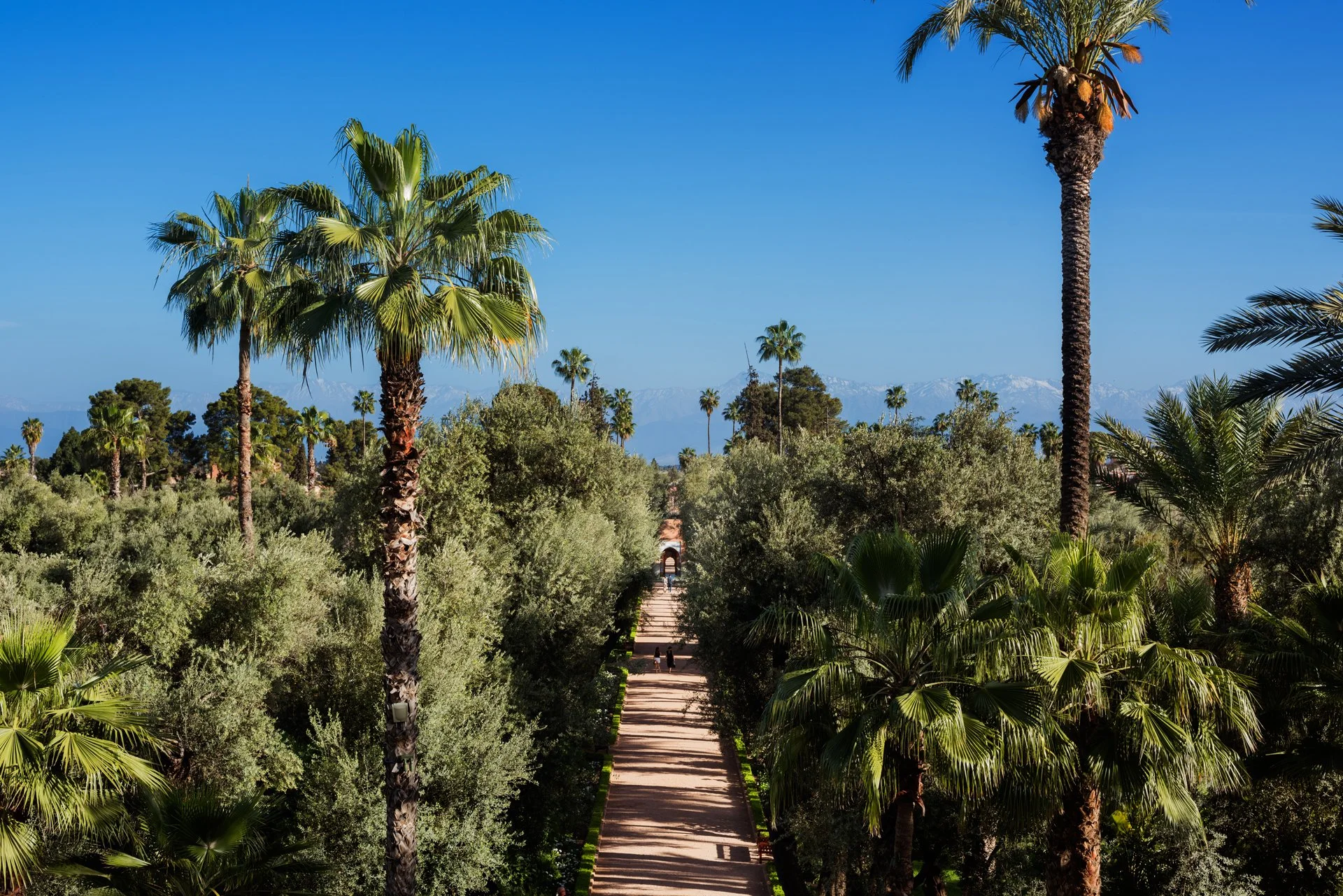
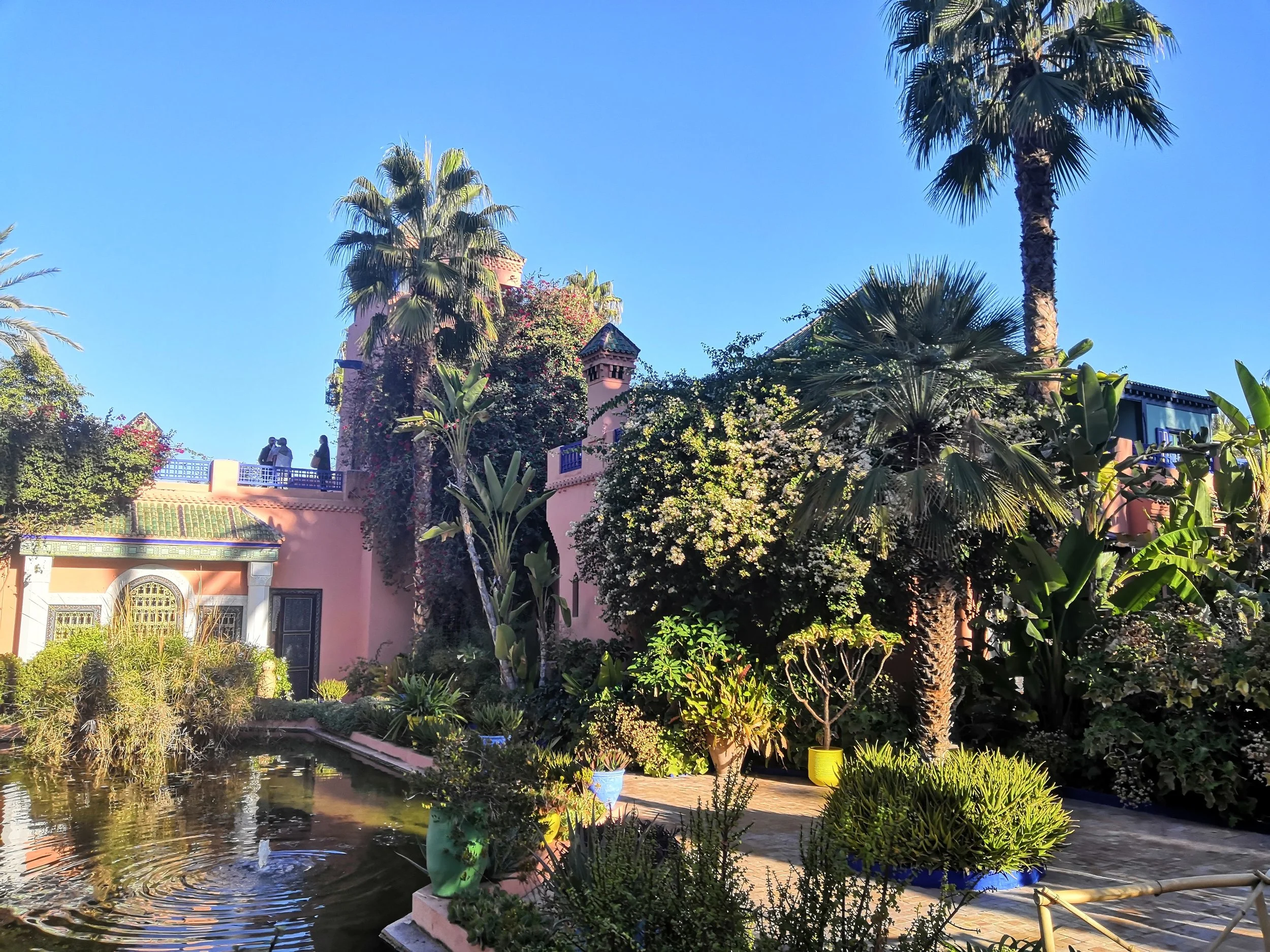
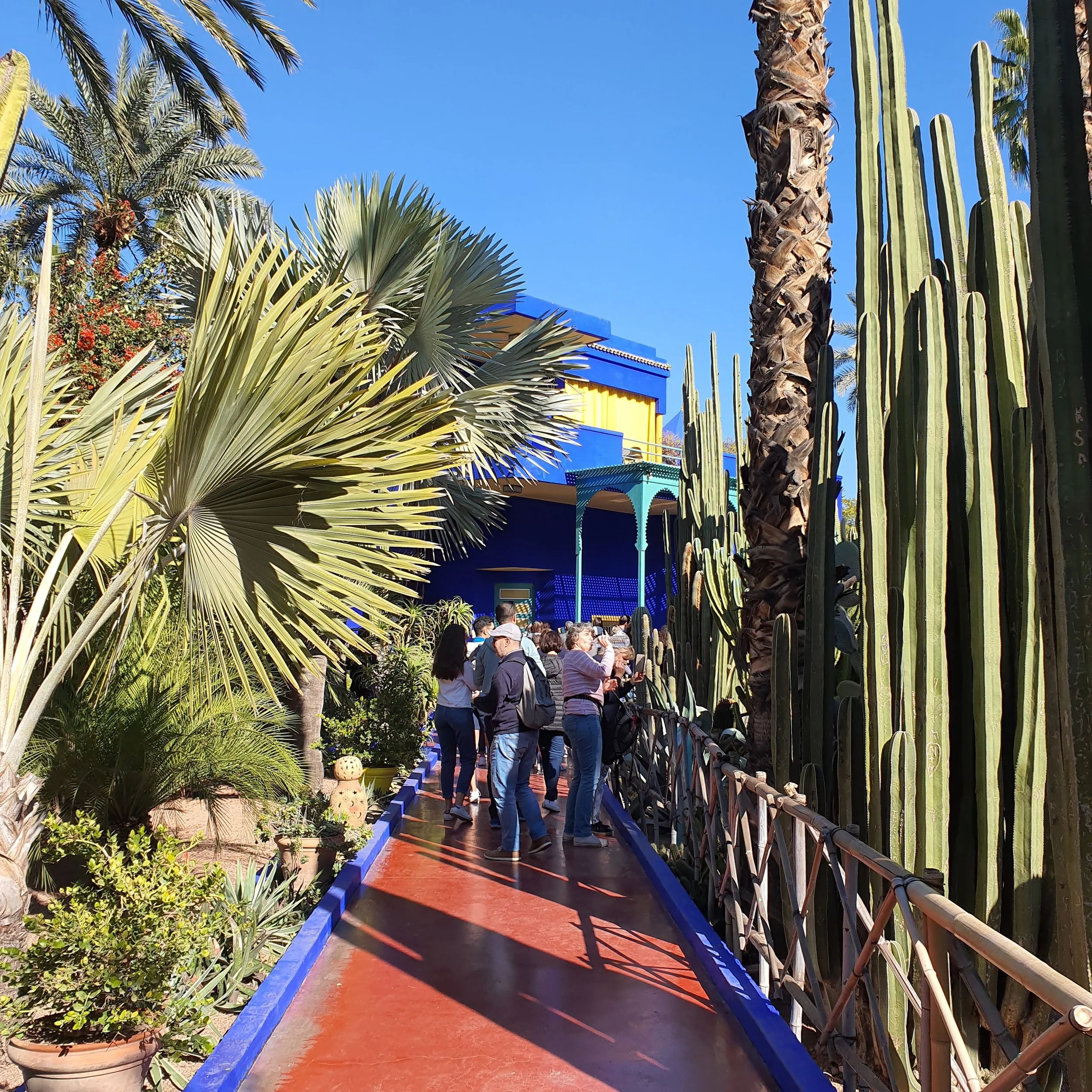
The final morning belongs to the Majorelle Garden: the botanical garden created by the French painter Jacques Majorelle from the 1920s, in the cobalt blue that now carries his name, and later bought and restored by Yves Saint Laurent. Then checkout, and your chauffeur takes you to Marrakech Menara Airport (RAK) for your onward flight.
What is included
Amine Nasraoui, certified historian guide, guiding personally whenever he can; otherwise a licensed guide, hand-selected by Amine Nasraoui
Private vehicle and professional chauffeur for the whole journey, including airport arrival and departure transfers
Accommodation in selected five-star properties in Marrakech and the finest hotels, riads and kasbahs available along the southern route, from our partner properties (subject to availability), including two nights in a private tent at a luxury camp in Erg Chebbi
Breakfast daily, and dinner and breakfast during the desert-camp stay
Monument and site entrances named in the itinerary
The Madfouna lunch in Rissani on Day 6
The camel trek into Erg Chebbi (with the 4x4 alternative), the private 4x4 desert day, and the Gnawa performances at the camp and in Khamlia
A private airport welcome at Marrakech Menara Airport
The horse-drawn carriage ride along the Marrakech ramparts on the evening of Day 1
What is not included
International flights
Moroccan visa fees where applicable
Travel insurance (required — see Terms & Conditions)
Lunches and dinners except the Madfouna lunch on Day 6 and dinners during the desert-camp stay
Personal expenses
Gratuities for your guide and chauffeur, at your discretion
Questions about this journey
How much driving does this journey involve?
The south is a road journey by design — the distances are part of it, and they are travelled in a private vehicle with your chauffeur, at your pace, with stops. The longest days are Day 8, from Merzouga to Agdz, and Day 9, from Agdz to Marrakech, each about six to seven hours with stops. Most other driving days run three to five hours.
Can we fly instead of driving?
Yes. A private helicopter charter between Marrakech and the desert can replace the longest road days. It is arranged on request, quoted separately, and subject to weather and availability.
Do I have to ride a camel to reach the camp?
No. The sunset camel ride is there for those who want it; a 4x4 takes you to the camp just as comfortably, and the choice can be made on the day.
What is the desert camp like?
You stay in a private tent in a luxury camp at Erg Chebbi: a full-size bed, dinner and breakfast served at the camp, and the dunes at the door. The camp is selected from our partner properties when your journey is designed, subject to availability.
When is the best time of year for this journey?
October to April brings the kindest temperatures in the south. Spring adds the rose harvest in the Valley of Roses (late April into May). Summer days in the desert pass 40°C, and midwinter nights in the dunes can fall close to freezing — both are workable, and your guide will plan the days around the season.
What should I pack for the desert?
Layers are the whole answer: warm clothing for the evening and early morning, a light jacket for the Atlas passes, closed shoes for walking in sand, and sun protection for the day. A full packing note is sent before departure.
Who will guide us?
Amine Nasraoui — certified historian guide, 14 years in the field — guides personally whenever he can. When he cannot, a licensed guide, hand-selected by Amine Nasraoui, travels with you, and your private chauffeur is with the journey throughout.
Prefer a printed copy?