
Why You Need a Morocco Travel Advisor — Not Just a Travel Agent
The rise of digital technology has made booking a trip anywhere in the world easier than ever. With a single tap, a traveler can reserve a flight, a hotel, or an experience halfway across the globe. But this convenience has a hidden cost — one that few travelers are prepared for until they’re standing in the middle of it.
Drawing on my years as a licensed tour organizer, guide, and historian in Morocco, I want to answer three questions that matter more than most travelers realize: Why does having too many options actually make travel harder? Can a Morocco travel advisor solve problems a booking website never sees coming? And can you really rely on a traditional travel agent alone?
The Problem With Too Many Choices
The first challenge any traveler faces is simply the overwhelming number of options. Search for a hotel in Marrakech, Fes, Casablanca, or Tangier, and you’ll find thousands of classified and unclassified riads, guesthouses, and hotels. Your goal for the trip should guide the choice — someone shopping needs to stay near the souks; someone drawn to history needs proximity to museums and monuments. But here’s what most travelers don’t know: many hotels listed online as “five-star” in Morocco deliver service closer to three-star, often because ownership has changed hands — especially since the pandemic — or because Morocco’s Ministry of Tourism simply hasn’t updated the property’s classification yet.
There’s a second issue I’ve witnessed constantly across fourteen years in this industry: many hotels sit outside the reach of any urban transit, especially inside the ancient medinas. Travelers end up walking for over two hours, dragging heavy luggage through narrow alleys — with Google Maps offering little help in cities that are over a thousand years old and were originally built as defensive labyrinths against invaders.
Beyond that, some hotels aren’t reachable by any transport at all, forcing guests to pay transfer fees that can equal the cost of a night’s stay just to arrive. And once they do, the property rarely matches the polished photos they booked online. Not knowing the city can also mean unknowingly wandering into unsafe neighborhoods, far from the restaurants and shops a traveler needs day to day.
A Story That Changed How I See This Work
In 2020, on a sunny day during Ramadan, a friend called me at 11 a.m. asking for help at the riad where he worked in Marrakech. When I arrived, I found two visitors from Belgium, visibly shaken. My friend explained: someone had presented himself as a guide, offering to walk them to their riad. Thirty minutes into the walk, a motorbike pulled up beside them — the “guide” grabbed their bag and disappeared. We had to take them straight to the police station to file a report.
Afterward, I gave them a free tour, partly to show them this kind of incident is genuinely rare in Morocco — affecting roughly 1% or less of visitors. The Belgian traveler confirmed it himself: he’d visited Morocco multiple times and never encountered anything like it. What struck me most was what he said next — he’d chosen that riad because it appeared “five-star” and close to the old city’s markets online, never imagining he’d need to walk an hour just to reach Jemaa el-Fnaa.
Why Travelers Need a Real Advisor, Not Just a Website
Stories like this are exactly why travelers need more than a search engine — they need a certified historian guide who genuinely knows the hotels, the neighborhoods, and the city itself. When a client tells me they want a hotel near the souk, I can offer real options based on firsthand experience, matched to their needs and expectations. My personal relationships with these properties often mean complimentary breakfast, airport pickup, and help transporting luggage — all at the same price you’d find online, but backed by real, on-the-ground knowledge and my partnership with Fora Travel.
That partnership gives clients the highest level of comfort with zero stress: flexibility to change arrival or departure dates, and a direct line to someone who can solve a problem immediately — say, changing a room — without navigating hotel reception queues, waiting, and often being told no because the booking came through a website.
Where Traditional Travel Agents Fall Short
If you’re considering a traditional travel agent instead, I can speak from direct experience working alongside many of them in Morocco. I once watched an agent sell a private flight departing from a city that doesn’t even have an airport — I had to drive the clients 250 kilometers to the nearest one. Agents like this often know hotel categories and star ratings, but little about a property’s actual location, service quality, or how it fits into your specific journey.
The Real Difference: Your Time
In short, a Morocco travel advisor’s job is to remove friction — and it’s the attention to small details that makes a trip effortless and enjoyable, giving you back the time you came for: exploring, resting, and truly experiencing the destination.
These figures aren’t drawn from any official survey — they’re my own estimate, based on fourteen years of watching travelers move through Morocco firsthand. But the pattern has held remarkably consistent. Travelers who book through a travel advisor keep roughly 92% of their time for themselves — shopping, new experiences, or relaxing in classified luxury hotels. Travelers who go through a standard travel agent retain only 54–60% of their time; the rest disappears into finding transport, searching for a nearby restaurant, or figuring out the way back to the hotel.
Travelers who book everything themselves fare worst of all — often keeping just 30% or less of their time for themselves. Most end up changing hotels at least once, while handling every booking personally: airport transfers, restaurant reservations, taxis or private transport, and every unexpected issue along the way.
Why I Built Morocco Vistas
This is exactly why, the moment I arrived in the United States, I decided to build my own company. My goal was twofold: to bring fourteen years of hard-earned field experience to American travelers, making their Morocco journey effortless — and to give them the freedom to focus entirely on Morocco’s history, culture, and beauty, without a single disruption.
That same reasoning is what drew me to partner professionally with Fora Travel — not just for the caliber of hotels and private aviation they offer, but for the guarantees and protections extended to my guests, and for the consistently high standards their service is known for.
What Sets Morocco Vistas Apart
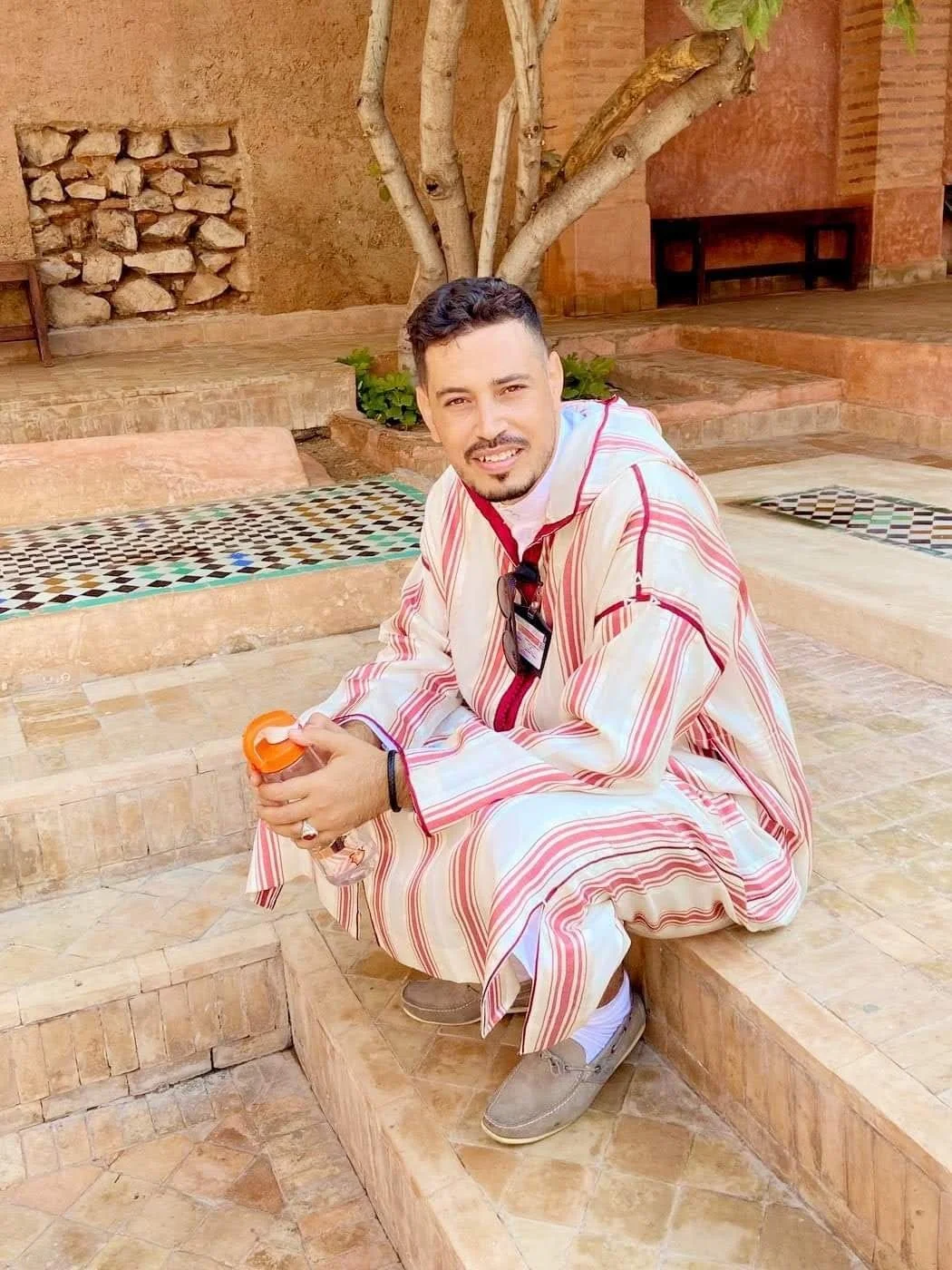
Through our partnership with Fora Travel, Morocco Vistas doesn’t claim to be the best Morocco travel advisor out there. We aim to be beyond ranking altogether — through real service and genuinely personal attention. That means direct access to me, Amine Nasraoui, your state-certified guide recognized by Morocco’s Ministry of Tourism, and to Fora’s hotel booking specialists, whom I personally brief on the exact properties I want for you — chosen not only for their history and reputation, but for their location and how precisely they fit your reason for traveling. Every journey we design is private, unique, and built entirely around the person taking it.
If privacy, distinction, and exclusivity are what you’re looking for in a bespoke Morocco itinerary, Morocco Vistas is where you belong. We’re based here in the United States, and we’re your companion on Morocco’s storied, timeless roads.
— Amine Nasraoui
Architects of Empire: The Illustrious Women Who Shaped Moroccan History
The history of Morocco has been profoundly shaped by extraordinary women who served as beacons of erudition, resilient figures of resistance, and nurturers of dynasties. From the legendary Amazigh queen Dihya—who fiercely defended her realm in the 7th century against early expansions, employing brilliant scorched-earth military tactics and earning renown as a formidable sovereign—Morocco's past boasts a rich legacy of female leadership. Yet, some of the most enduring contributions to the nation’s socio-political stability and global academic prestige belong to two monumental figures of the medieval era: Zaynab an-Nafzawiyyah, the strategic mastermind behind the Almoravid Empire, and Fatima al-Fihri, the visionary founder of the world's oldest continuously operating university in Fez.
Zaynab an-Nafzawiyyah: The Queenmaker of the Almoravid Empire
Born in the latter half of the eleventh century, Zaynab bint Ishaq an-Nafzawiyyah was the daughter of a wealthy merchant from Aghmat—a bustling commercial hub nestled along the foothills of the High Atlas Mountains. The immortal historian Ibn Khaldun lauded her as one of the most remarkable women of her age, celebrated not only for her ethereal beauty but for her unmatched political acumen, wisdom, and leadership. Often styled as the "Wife of Kings," Zaynab wielded considerable influence in Aghmat, initially marrying prominent local chieftains who governed the city's trade, judicial disputes, and tribal alliances.
Her trajectory shifted dramatically when she married the Almoravid leader, Emir Abu Bakr ibn Umar. As Aghmat grew too constrained for the massive trans-Saharan trade caravans, Abu Bakr initiated the foundational layout of Marrakech. However, called to the southern Saharan regions to settle tribal conflicts and spread Islam, Abu Bakr made the calculated decision to divorce Zaynab, explicitly advising her to marry his cousin and successor, Youssef ibn Tashfin, to ensure political continuity.
The subsequent union between Youssef ibn Tashfin and Zaynab an-Nafzawiyyah birthed an empire. Together, they transformed Marrakech from a rudimentary military camp into a magnificent metropolis, establishing markets, schools, and hospitals that rivaled the grandest capitals of Al-Andalus. Years later, when Abu Bakr ibn Umar returned from the south, Morocco stood on the precipice of a devastating civil war between the founding emir and Youssef, who had successfully consolidated the state. It was Zaynab’s peerless diplomacy that averted bloodshed. Recognizing Abu Bakr's noble but proud character, she counseled her husband:
"By Allah, I do not wish for this fitnah (strife) to consume us. I know Abu Bakr well; he is a man of honor who abhors the shedding of Muslim blood. Meet him outside the walls of Marrakech with the full grandeur of your army. Let him witness the absolute majesty of your rule and the scale of the city, but do not dismount from your horse. He will understand the shift in power and choose peace."
Youssef followed her counsel precisely. Acknowledging the unspoken message of authority and statehood, Abu Bakr gracefully saluted Youssef with the respect due to a ruling monarch, opting to return to the southern frontiers. This strategic masterstroke effectively unified the Almoravid realm: Abu Bakr secured the southern Saharan territories while Youssef consolidated the north, ultimately forging an empire that stretched from the Senegal River to the Ebro in Europe.
Zaynab and the Defense of Al-Andalus
With North Africa unified, the Almoravids turned their gaze toward Al-Andalus, answering the desperate pleas of the Taifa kings who were collapsing under the Christian Reconquista led by Alfonso VI. When the Andalusian sovereign Al-Mu'tamid ibn Abbad famously declared that he would "rather tend camels for Youssef ibn Tashfin than herd swine for Alfonso," Youssef hesitated. The Moroccan army was unaccustomed to maritime crossings and the European theater of war.
Once again, Zaynab provided the decisive tactical insight. She advised Youssef to transport his vast numbers of Saharan camels across the straits into Iberia. She reasoned that European warhorses, unaccustomed to the sight, smell, and terrifying stature of camels, would panic on the battlefield. Her psychological warfare tactic proved flawless at the historic Battle of Sagrajas (Al-Zallaqah) on October 23, 1086, securing a legendary victory that extended Islamic rule in Spain for centuries. Zaynab an-Nafzawiyyah was never merely a consort; she was a brilliant co-ruler and military strategist whose foresight repeatedly saved her nation from internal fragmentation and external defeat.
Fatima al-Fihri: The Mother of Modern Academia
While Zaynab anchored the geopolitical boundaries of Morocco, another extraordinary woman, Fatima al-Fihri, permanently transformed the world’s academic landscape. Born in the early 9th century, Fatima migrated with her family from Kairouan (in modern-day Tunisia) to the burgeoning spiritual heart of Morocco, the city of Fez.
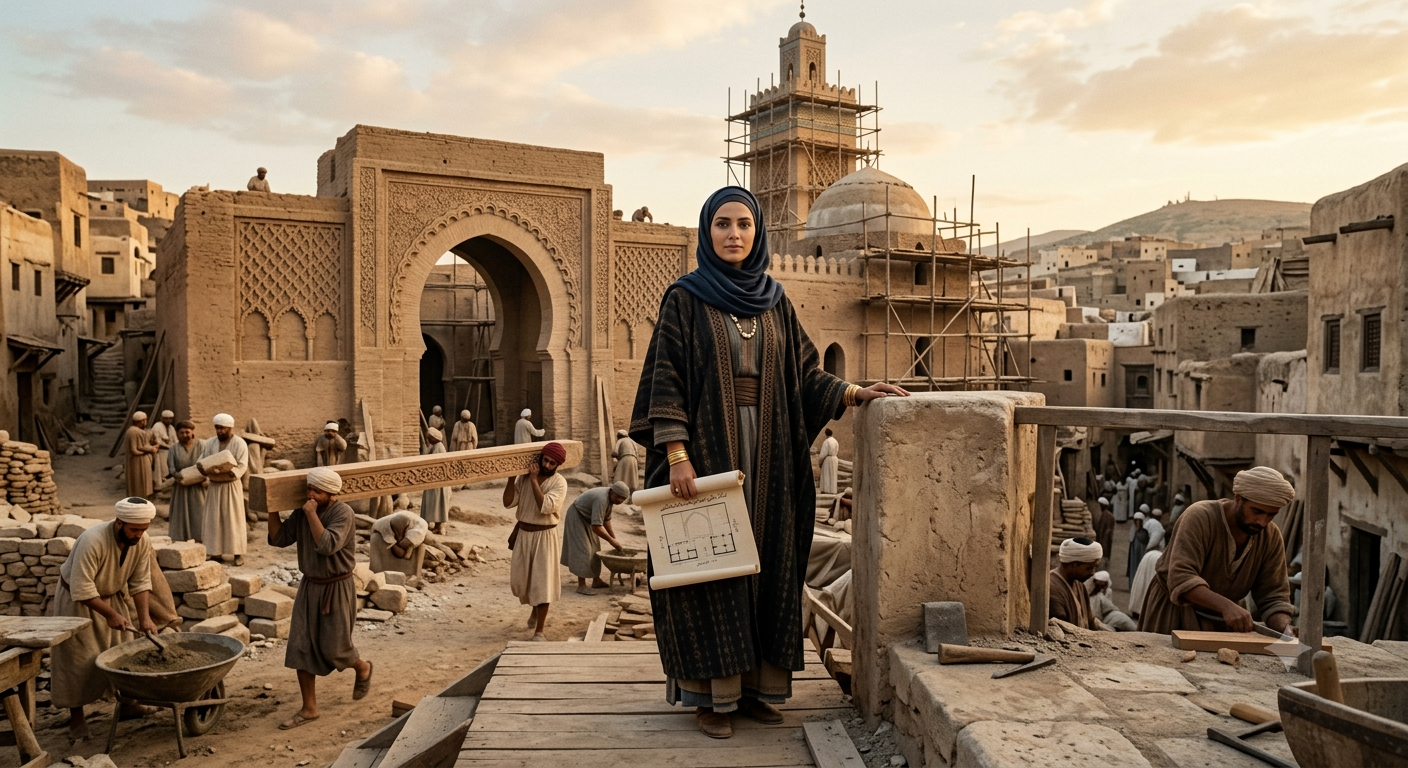
Upon inheriting a vast fortune from her wealthy merchant father, Fatima resolved to dedicate her entire inheritance to a monumental community project. In 859 AD, she broke ground on the University of Al-Qarawiyyin. Demonstrating extraordinary piety and dedication, she supervised the construction daily, committing to a strict personal fast from dawn until dusk throughout the years it took to build. Furthermore, she established an endless endowment (Waqf) to provide free housing, stipends, and resources for traveling scholars and students.
Today, Al-Qarawiyyin stands proudly as the oldest continuously operating, degree-granting institution of higher learning in the world—a fact formally recognized by UNESCO, which designated it as a protected world heritage site in 1981. It served as the crucible where Islamic sciences, mathematics, astronomy, and medicine flourished, bridging Western and Eastern thought.
Conclusion: Redefining the Historical Narrative
To look at traditional Moroccan society through a superficial lens is to mistake it for a strictly patriarchal domain. A deeper exploration into the archives of Moroccan history reveals that women have always been the foundational architects of its civilization, politics, and intellectual heritage. This article highlights but two luminaries who engraved their legacies in gold. When one visits Morocco today, one discovers that behind its timeless grandeur stands the enduring spirit of magnificent women who wrote—and continue to write—the history of a great nation.
The Tapestry of Time: Unveiling the Masterpiece of Moroccan Identity
Unveiling the deep Andalusian roots, cultural confluences, and the living continuum of the Moroccan identity.
To the casual observer, the cultural identity of Morocco is often simplified into a harmonious dualism of Amazigh and Arab heritages. Yet the truth of this ancient nation is infinitely more profound. Seated upon one of the most strategically significant coordinates on earth, Morocco stands as the majestic portal where Africa and Europe meet, and where the Atlantic opens a timeless gateway to the Western Hemisphere. This unique geographic destiny transformed the Kingdom into a fertile crucible, absorbing and refining the heritages of the Phoenicians, Romans, the early Islamic era, and the Andalusian refugees who fled the Reconquista.
Ancient Roots: The Enduring Amazigh Civilization
Long before recorded history, the Amazigh people cultivated a sophisticated civilization across the plains, mountains, and desert edges of North Africa. Their command of trans-Saharan trade routes — carrying salt, gold, and ivory — connected the region to Sub-Saharan Africa centuries before European contact, while Mediterranean trade linked them to Egypt and the Levant. Their legacy endures today in the language of Tamazight, in the architecture of the High Atlas kasbahs, and in the intricate weaving traditions still practiced by Amazigh women.
When Phoenician traders established coastal outposts like Lixus, and Romans later built cities such as Volubilis, they did not encounter an empty land, but a highly organized and self-sufficient civilization. This encounter sparked genuine mutual exchange: Amazigh communities absorbed advanced Roman viticulture and olive oil production, while retaining their own governance, customs, and identity largely intact.
The Islamic Synthesis and the Birth of Al-Andalus
By the 7th century, Arab expeditions reached North Africa, meeting a resilient Amazigh civilization already shaped by generations of contact with Jewish and Christian communities. The integration between Arab and Amazigh worlds unfolded gradually, blending new spiritual and administrative currents with local traditions of statecraft, agriculture, and scholarship inherited from Amazigh, Phoenician, and Roman precedents. This layered convergence of peoples and ideas crystallized into the golden age of Al-Andalus — one of the most celebrated civilizations in Mediterranean history.
The Andalusian Return: An Unbroken Legacy
Following the fall of Granada in 1492, the descendants of those who built Al-Andalus returned to their ancestral Moroccan homeland. Carrying advancements in medicine, mathematics, engineering, and architecture, these returning communities established refined enclaves in cities like Tetouan, Chefchaouen, and the historic quarters of Fes, Meknes, and Marrakech.
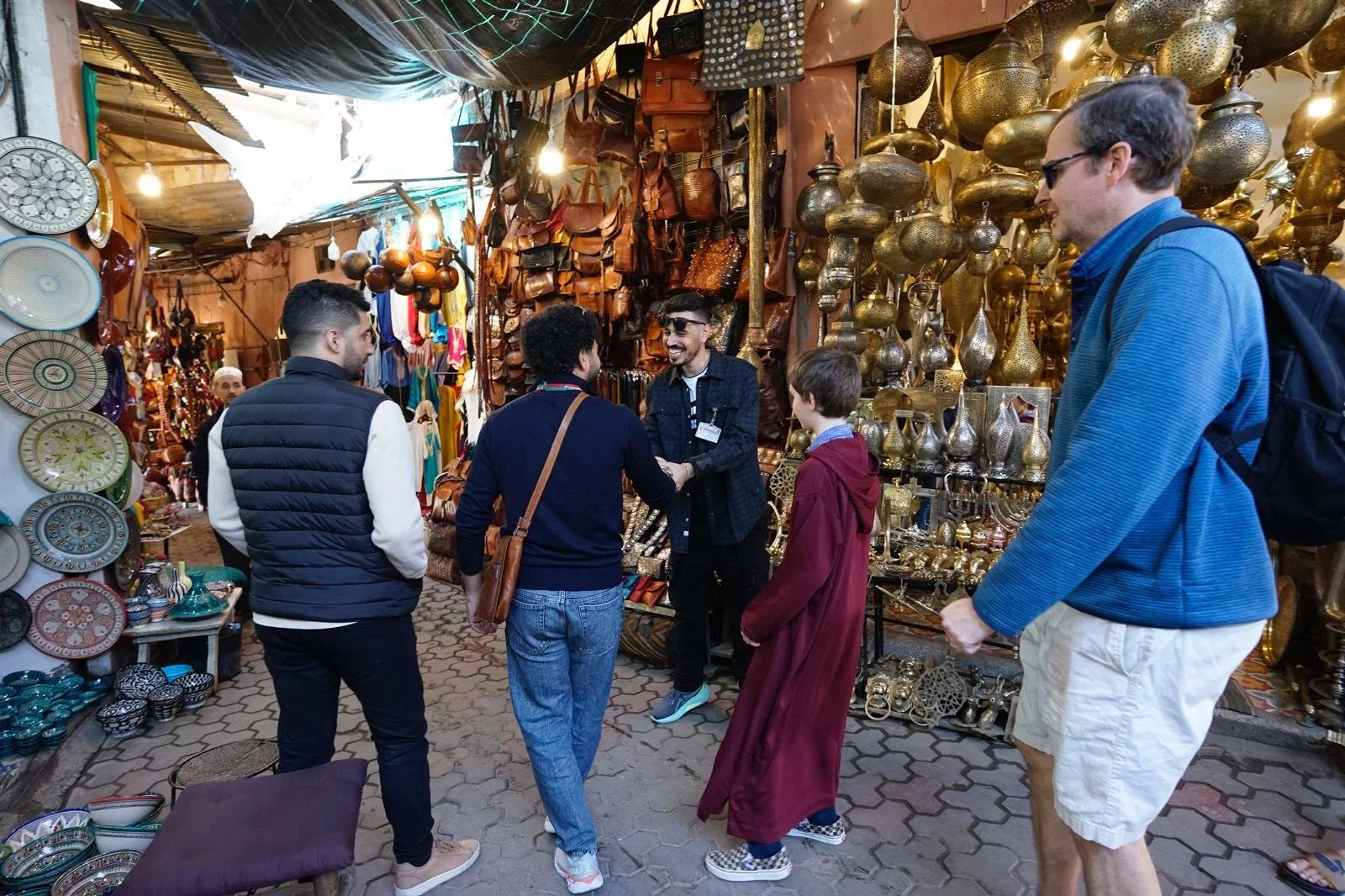
As the centuries passed, their sophisticated lifestyle reshaped Morocco’s cultural fabric. They elevated Moroccan gastronomy, introducing the refined layers of Pastilla, tagines, and specialized couscous preparations that define our culinary identity today. They adorned Quranic schools, grand mosques, and palatial riads with intricate Andalusian zellij tiling, carved cedarwood, and fluid stucco work — monuments that still stand as witnesses to this golden age.
A Living Continuum
What elevates Morocco above any other destination is the absence of historical rupture. New generations do not merely study this heritage in textbooks; they live it, breathe it, and protect it. Morocco’s cultural fabric remains a rare example of layered coexistence and enduring craftsmanship.
At Morocco Vistas, we invite your discerning clients to do more than observe this history. Our tailored journeys are curated to let them feel the pulse of this unbroken continuum — where the luxury of the present is beautifully grounded in the majesty of time.